Three UC national laboratory scientists and two former postdoctoral fellows are among the nine recipients of the prestigious Ernest Orlando Lawrence Award for their exceptional contributions to research and development supporting the U.S. Department of Energy’s (DOE) missions in science, energy, and national security, U.S. Secretary of Energy Chris Wright announced last week (Oct. 13).
Established in 1959, the Lawrence Award recognizes mid-career U.S. scientists and engineers for groundbreaking achievements across nine scientific and engineering categories. The award is among the longest-running and most prestigious science and technology honors bestowed by the U.S. government.
The 2026 Ernest O. Lawrence Award recipients are:
Patrick Chain, Ph.D. (Los Alamos National Laboratory and New Mexico Consortium) — Biological and Environmental Sciences — Honored for his “pioneering work in genomics and microbiome science, including discoveries of new bacterial-fungal interactions and revolutionizing the field by democratizing access to advanced bioinformatics tools.”
Samuel W. Williams, Ph.D. (Lawrence Berkeley National Laboratory) — Computer, Information, and Knowledge Sciences — Honored for his “pioneering contributions in performance modeling, hardware/software design optimization, and novel computer architecture for high-performance computing, enabling modeling of complex computational solutions, and increasing analysis speed, simulation accuracy, and computational efficiency.”
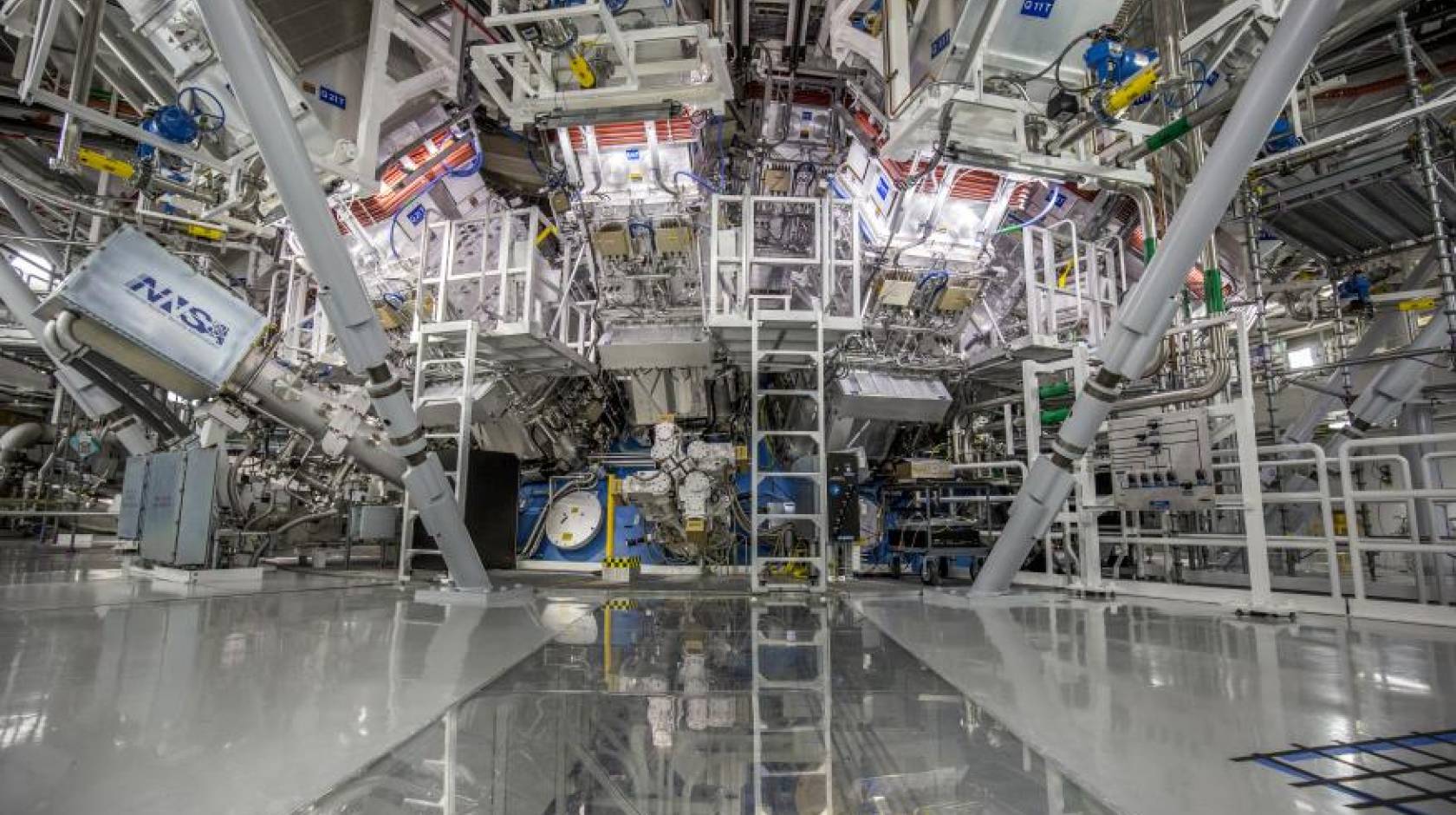
Andrea L. Kritcher, Ph.D. (Lawrence Livermore National Laboratory) — Fusion and Plasma Sciences — Honored for her “exceptional design efforts leading to the first-ever achievement of fusion ignition in the Laboratory, which is of major scientific impact to institutional and national missions, the private sector, and fusion interests within academia.” Kritcher earned her Ph.D. at UC Berkeley while a Lawrence Graduate Scholar and is a former Lawrence Postdoctoral Fellow at Lawrence Livermore National Laboratory.
Lijuan Ruan, Ph.D. (Brookhaven National Laboratory) — Nuclear Physics — Honored for her “outstanding leadership and ingenuity in the design, construction, and operation of novel detector systems in the STAR experiment, transforming dilepton final states into precision probes of heavy ion collisions.” Prior to her work at Brookhaven, Ruan was a postdoctoral fellow at Lawrence Berkeley National Laboratory, where she continued the work for which she earned her Ph.D.
Eric J. Schelter, Ph.D. (University of Pennsylvania) — Atomic, Molecular, and Chemical Sciences — Honored for his “fundamental chemical studies of energy-critical metals leading to new methods for their selective and sustainable separations.” Prior to becoming a professor at Penn, Schelter was a Glenn T. Seaborg Postdoctoral Fellow, Director's Postdoctoral Fellow, and Frederick Reines Postdoctoral Fellow in Experimental Sciences, all at Los Alamos National Laboratory.
DOE will honor the recipients at a hybrid award ceremony in Washington, D.C., on November 13, 2026. Read more about the fellows and their extraordinary work below.
Andrea L. Kritcher

Lawrence Livermore National Laboratory (LLNL) scientist Andrea L. Kritcher was named one of nine recipients of the prestigious 2026 Ernest Orlando Lawrence Award for exceptional contributions in research and development supporting the U.S. Department of Energy’s (DOE) missions in science, energy and national security.
She was recognized for “exceptional design efforts leading to the first-ever achievement of fusion ignition in the laboratory, which is of major scientific impact to institutional and national missions, the private sector and fusion interests within academia.”
“This year’s Lawrence Award recipients exemplify the ingenuity and determination that drive America’s leadership in science and technology,” said U.S. Secretary of Energy Chris Wright. “From achieving fusion ignition to advancing critical materials and high-performance computing, these scientists and engineers are tackling some of our nation’s most complex challenges and translating groundbreaking research into real-world capabilities. Their work strengthens our nation’s energy security, drives American innovation and ensures the United States remains at the forefront of scientific discovery.”
"I was pleasantly surprised and deeply humbled to learn I am receiving the E.O. Lawrence Award. My 22-year journey at Lawrence Livermore has been a wild ride at an extraordinary, unmatched place for science,” Kritcher said. “Achieving fusion ignition was a monumental goal that generations of scientists and engineers worked toward. I feel incredibly fortunate to have had the opportunity to play a significant role in achieving this milestone.”
She began her LLNL career in 2004 as a summer intern while studying nuclear engineering at the University of Michigan, returning as a Lawrence Graduate Scholar while earning her Ph.D. at the University of California, Berkeley and later earning the prestigious Lawrence Postdoctoral Fellowship. Over more than 22 years at the Laboratory, she has worked across nuclear physics, high-energy-density physics and inertial-confinement fusion experiment and design.
Kritcher developed and led the physics design of a series of landmark National Ignition Facility (NIF) fusion experiments, including the first burning fusion plasma in 2021, experiments that satisfied Lawson’s criterion for ignition later that year, and the December 2022 experiment that achieved fusion ignition and target gain greater than one for the first time in any laboratory fusion experiment. She has continued to lead design and development of the ignition platform through subsequent experiments that have achieved progressively higher fusion performance.
In 2022, she received the John Dawson Award in plasma physics. Kritcher became an American Physical Society Fellow in 2023 and was named to the “Time 100” (one of Time magazine’s 100 most influential people in the world in 2023) and Nature’s top 10 list (one of 10 people who made the most significant contributions to science).
Currently she serves as a leader in the Inertial Confinement Fusion program at LLNL and leads efforts to develop the next generation of higher-yield NIF designs, building on the experimentally demonstrated NIF ignition platform to further increase fusion performance and yield.
Samuel Williams

Samuel Williams, a senior scientist in the Lawrence Berkeley National Laboratory’s (Berkeley Lab’s) Applied Mathematics and Computational Research Division (AMCR) and the National Energy Research Scientific Computing Center (NERSC) is the recipient of the U.S. Department of Energy’s (DOE’s) Ernest Orlando Lawrence Award in the category of Computer, Information, and Knowledge Sciences. Williams is being recognized for “pioneering contributions in performance modeling, hardware/software design optimization, and novel computer architecture for high-performance computing (HPC), enabling the modeling of complex computational solutions and increasing analysis speed, simulation accuracy, and computational efficiency.”
Williams is one of nine recipients of the 2026 award and will be honored at a ceremony in Washington, D.C., on Nov. 13. Established in 1959 to honor Berkeley Lab founder and Nobel Laureate Ernest Orlando Lawrence, who ushered in the era of multidisciplinary big science, the award recognizes mid-career U.S. scientists for exceptional contributions supporting the DOE’s mission.
“This year’s Lawrence Award recipients exemplify the ingenuity and determination that drive America’s leadership in science and technology,” said U.S. Secretary of Energy Chris Wright. “From achieving fusion ignition to advancing critical materials and high-performance computing, these scientists and engineers are tackling some of our nation’s most complex challenges and translating groundbreaking research into real-world capabilities. Their work strengthens our nation’s energy security, drives American innovation, and ensures the United States remains at the forefront of scientific discovery.”
One of Williams’s most widely recognized achievements is the creation of the Roofline Performance Model, a visual framework that helps developers easily identify hardware bottlenecks and optimize their code. The concept was born out of the challenges he faced when writing his doctoral thesis on automatic performance tuning. Struggling to explain why a numerical method worked well on one machine but poorly on another, he created a graphical representation for his advisor. What started as a simple visual aid to avoid a wordy explanation quickly revealed its deep potential.
“Sam’s development of the Roofline model has been absolutely transformative. Before Roofline, developers often struggled to understand exactly why their applications weren’t performing as they expected,” said Jonathan Carter, Associate Laboratory Director for Computing Sciences at Berkeley Lab. “By providing a clear, visual map of hardware bottlenecks, his work has demystified complex constraints and empowers researchers to push the boundaries of what our supercomputers can achieve.”
The Roofline Model is now an industry-standard framework adopted globally by academia, industry, and DOE user facilities. Major technology vendors, including Intel and NVIDIA, have integrated these methodologies into their flagship performance analysis tools, giving millions of software developers powerful optimization capabilities. Originally rooted in traditional HPC, the model’s versatility has driven its expansion into machine learning, computer architecture design, computer-aided engineering, computer science education, and even options pricing in the financial sector.
As supercomputing architectures evolved, Williams continually expanded the Roofline model’s capabilities. He updated the framework to capture the intricate memory and processing layers of modern GPUs. While originally designed to analyze individual applications, the model was recently expanded to evaluate the massive, diverse scientific workload of an entire supercomputer, demonstrating this approach on NERSC’s Perlmutter system. He also extended this methodology to help researchers pinpoint bottlenecks across complex, multi-step scientific workflows.
Beyond performance modeling, Williams has led multiple efforts to increase the efficiency and productivity of supercomputing code. Notably, under the DOE X-Stack program, he collaborated with Mary Hall at the University of Utah on the development of stencil-based auto-tuning and communication-avoiding techniques. Under the subsequent DOE Exascale Computing Project (ECP) PROTEAS-TUNE, he conceptualized and built the progenitor brick-based stencil computations. Researchers at the University of Utah ultimately refined these into the Bricks library — a software tool that reorganizes complex data so it can be processed much faster, enabling major scientific applications to run seamlessly and efficiently across a variety of CPUs and GPUs.
Williams also leads major efforts in novel architectural hardware and hardware-software co-design. He directed Berkeley Lab’s contributions to the ECP Hardware Evaluation project and served as a member of its PathForward project. Through numerous collaborations with NERSC, he evaluates next-generation experimental hardware, including field-programmable gate arrays (FPGAs), disaggregated memory architectures, and advanced microchips, to maximize performance while operating under realistic power limits on supercomputers. These collaborations have resulted in multiple Best Paper awards.
“What makes Sam’s work so impactful is his continuous drive to look ahead. From providing entirely new ways to understand performance bottlenecks to his current research integrating machine learning with high-performance computing, Sam’s contributions continue to advance the field,” said Stefan Wild, Director of the Applied Mathematics and Computational Research Division. “Sam is an outstanding researcher, and we are immensely proud to celebrate his selection for this prestigious award.”
Reflecting the spirit of large-scale, collaborative science that E. O. Lawrence championed, Williams noted that his success is the result of years of dedicated teamwork.
“I am incredibly honored by this recognition, but this body of work is truly the result of a massive team effort,” Williams said. “From the early funding risks taken by lab and ASCR leadership to the continuous collaborations within Berkeley Lab’s Computing Sciences divisions, NERSC, the broader Department of Energy complex, and our partners in industry and academia, none of this would have been possible without that collaborative support.”

