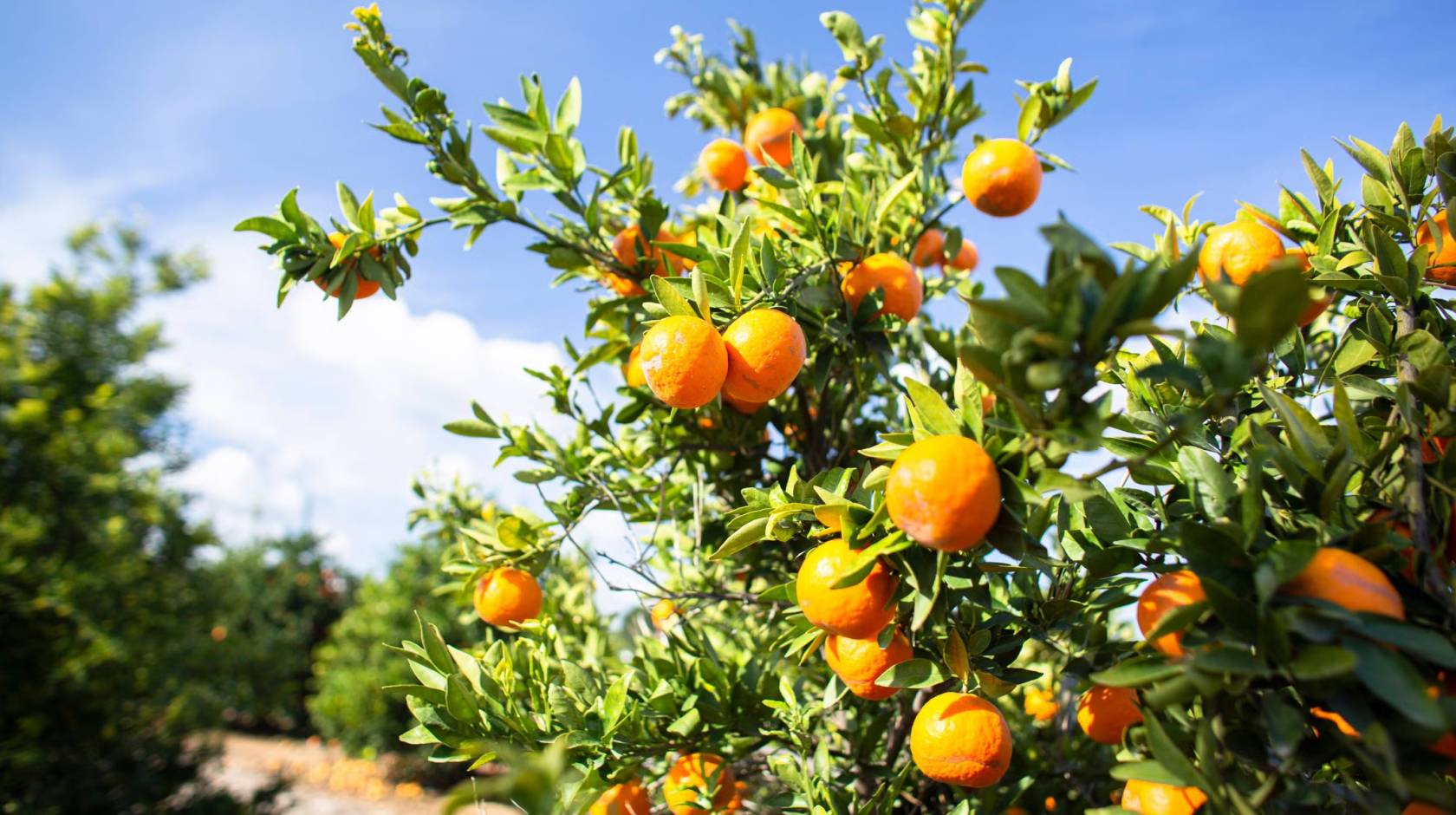
Imagine your grocery store without a produce section. No nuts, no wine, no fresh salad greens.
If California’s farming industry didn’t exist, we might not be able to dig into these foods — after all, the Golden State provides a third of the nation’s vegetables, and 75% of its fruits and nuts. At the very least, they would be much more expensive.
But all that abundance on your plate didn’t happen by accident — it’s the result of federal support for science and work by the University of California that goes back to the university’s earliest beginnings.
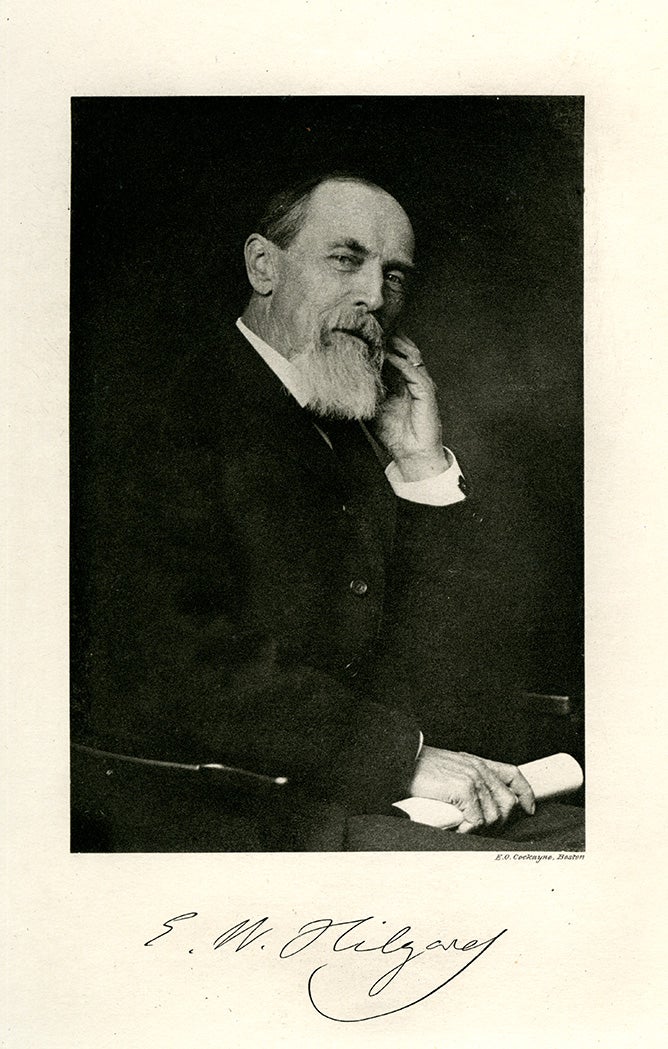
Eugene W. Hilgard
How science turned California into the country’s top farming state
Before California became the nation’s go-to state for the food on your plate, growing crops here was a challenge. After the Gold Rush ended, former miners shifted their picks to plows. But could they really have more luck with crops on such dry land?
That’s where the University of California entered the picture. One of its first professors was soil expert Eugene Hilgard, who left Michigan to take up the new challenge of helping California farmers.
Analyzing soil samples sent to him from Californians across the young state, Hilgard experimented to find the right techniques for leaching salt from the alkali soils to make the land productive. He and his UC colleagues helped farmers figure out what to grow, where, and laid the foundations for the state’s future as America’s premier wine-growing region.
Using the power of science to make new land productive boosted American prosperity, and Congress passed the Hatch Act in 1887 to support agricultural research. UC still works closely with farmers today, funded by the federal government via the Hatch Act and through the Smith-Lever Act for Cooperative Extension, which brings the latest crops and scientific developments into our fields, orchards and ranches.
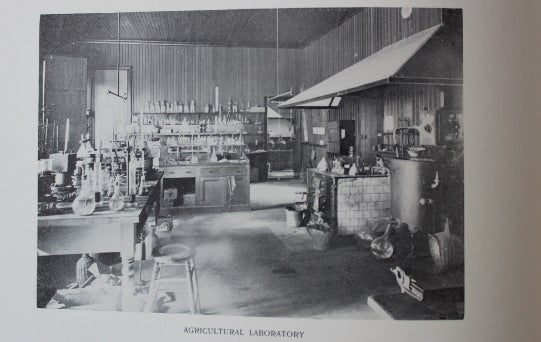
The fruits of their labor
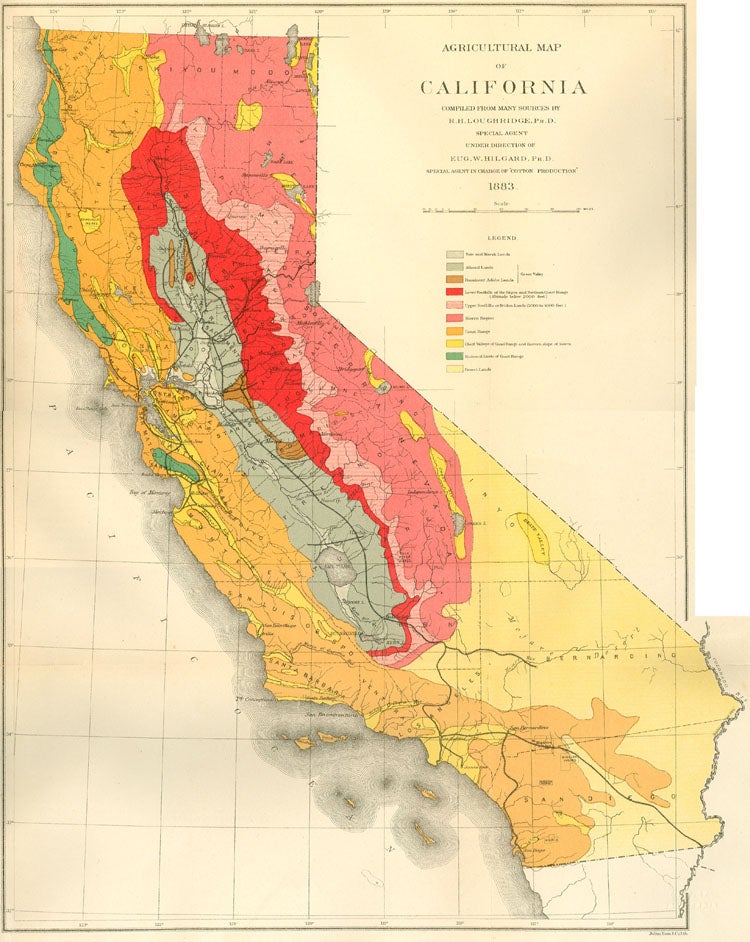
An 1883 Soil Map of California by Hilgard and R. H. Loughbridge, outlining soil types
California today produces more than 400 commodities, and thanks to the diligent work of past and present researchers at the University of California, you can enjoy, among other tasty foods:
the Tango mandarin, broadly sold as Cuties or Wonderful Halos, which UC Riverside developed to make an easy, on-the-go snack;
the Meyer lemon, one of America’s most popular, rescued by UC Riverside scientists in the 1940s from disease, a mission they still lead on today;
strawberries, now a year-round crop because of the UC Davis Public Strawberry Breeding Program, which created the varieties that account for about 60% of the fruit consumed worldwide;
pizza sauce and ketchup, thanks to UC Davis researchers who developed a machine for harvesting tomatoes — and an appropriate tomato — that is still the basis for how tomatoes are processed; and
nuts, like almonds and pistachios, for which California is now a global leader — a far cry from those early 19th-century frustrations.
Plus, California is also home to the nation’s top veterinary school at UC Davis, and some of the best facilities for livestock care in the country.
Developing American prosperity for the future
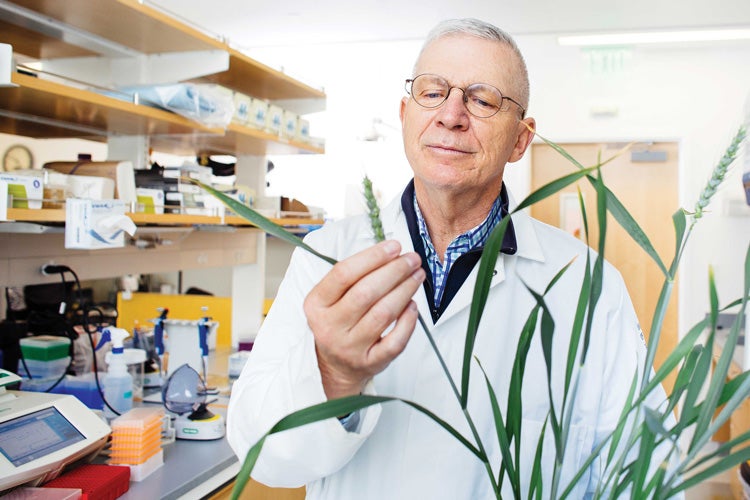
But UC research doesn’t just help California remain the breadbasket for the country — it also leads on food for our future:
UCSF researchers reveal the effects of sugar on the human body, not only its role in disease, but industry efforts to obscure the risks of sugar, thanks to federal support;
UC Santa Cruz broadens the world’s embrace of organic food by running what is now the oldest university-based organic research and education facility in the country;
UC Berkeley’s Jennifer Doudna won a Nobel for CRISPR-Cas9 gene editing, which has unlimited potential to help make our food system more resilient and is helping to rescue the chocolate industry; and
UC Davis and UC Riverside researchers, with federal support, developed a flood-resistant rice variety that could help feed millions.
The bread you break to celebrate America’s 250th this summer was years in the works, with many helping hands along the way. We hope you enjoy the delicious impact of UC’s efforts to help feed the nation.