UC San Diego alumni are soaring to great heights in 2026 — including space!
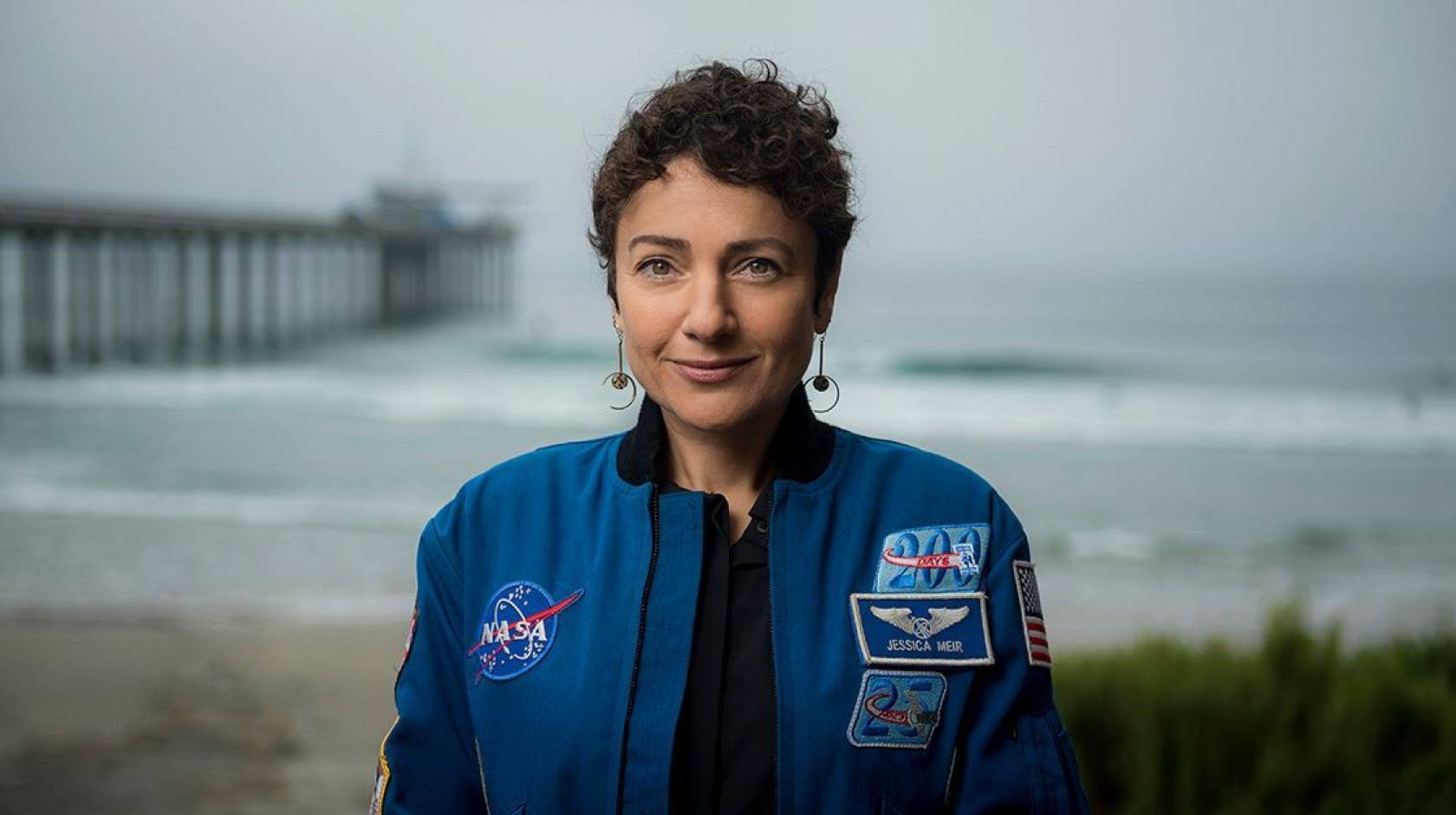
On Feb. 13, NASA astronaut Jessica Meir and three crewmates lifted off from Cape Canaveral Space Force Station in Florida as part of NASA’s SpaceX Crew-12 mission, bound for the International Space Station (ISS), an orbiting laboratory nearly 250 miles above Earth.
They traveled aboard a Dragon spacecraft, arriving at the station on Feb. 14 after a 34-hour voyage.
Meir, a graduate of UC San Diego’s Scripps Institution of Oceanography, reflected on the remarkable view from orbit, saying, “When we gaze at our planet from above, it is immediately clear that everything is interconnected. The vast oceans, the continuous land masses and all that they contain. We are one humankind here on our shared home planet.”
The mission marks Meir’s second journey to the stars, building on a lifelong dream she first realized in 2019. This time, she serves as spacecraft commander for Crew-12 and Expedition 75 — a milestone that reflects her evolution from mentee to mentor. Meir said the role brings “a new level of commitment and responsibility,” both in leading and supporting her crew. On a personal level, Meir noted that participating in a long-duration mission carries extra weight now that she is a wife and mother, but it’s a challenge she’s willing to embrace in service of science and exploration.
Over the next eight months, Meir and her crewmates will live and work aboard the ISS, carrying out scientific investigations for Expeditions 74 and 75 and testing new technologies to prepare humans for future missions to the moon and Mars, while advancing knowledge that benefits life on Earth.
To celebrate the launch, a small group of Meir’s friends and former colleagues from Scripps Oceanography made the trip to Florida to witness the moment firsthand, as viewers across campus and around the world tuned in via livestream.
“Jessica Meir’s path from doctoral researcher at Scripps Oceanography to NASA astronaut and now spacecraft commander is inspiring,” said Scripps Director Meenakshi Wadhwa. “It is an honor for UC San Diego to count her as a proud alumna, and I know I join many on campus in looking forward to following her remarkable journey.”
Path to the stars
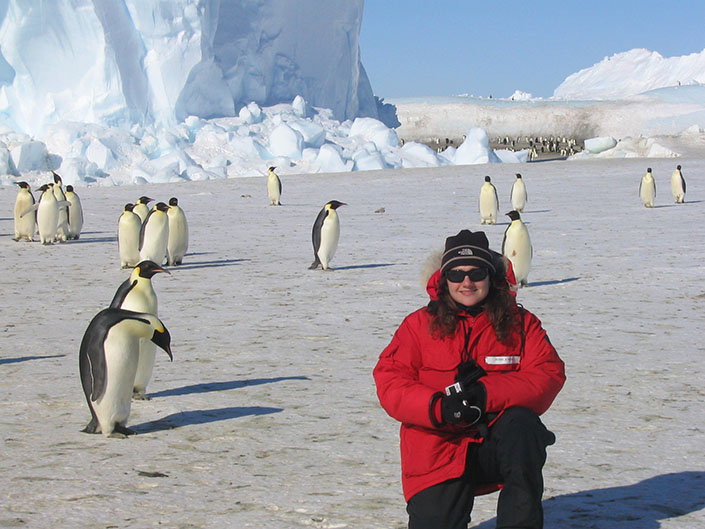
Meir’s sky-high ambitions took root during her childhood in rural Maine, where she was captivated by the area’s dark starry skies and expansive forests. Her passion for science and the natural world eventually led her to Scripps Oceanography, where she earned a Ph.D. in marine biology in 2009. Her research focused on the physiology of deep-diving animals in extreme environments and included several expeditions to Antarctica to study emperor penguins above and below the ice. Meir credits her Scripps advisors, Paul Ponganis and Jerry Kooyman, with providing the mentorship that supported both her research and her seemingly far-flung NASA dreams.
Previously, Meir has described Scripps Oceanography and UC San Diego as “powerhouse institutions” for research. She has also noted that innovative scientific work — especially in challenging environments — and a passion for exploration are qualities that appeal to NASA and contributed to her selection as an astronaut in 2013.
Her extreme training came in handy during her first journey to space, when Meir led hundreds of research experiments and conducted three spacewalks, including a historic all-female spacewalk alongside fellow NASA astronaut Christina Koch. Tethered for safety, the two ventured outside the station for more than seven hours to replace a faulty battery charger.
Meir is one of four remarkable UC San Diego alumnae who have served as NASA astronauts or been selected to the agency’s astronaut program. Fellow Scripps alumna Megan McArthur, who holds a Ph.D. in oceanography, spent more than two decades breaking new ground at NASA. Before retiring in 2025, she completed two spaceflights — helping to repair the Hubble telescope Kate Rubins, who earned her undergraduate degree in molecular biology, also completed two spacelights and became the first person to sequence DNA in space before retiring in 2025. Deniz Burnham, who studied chemical engineering as an undergraduate, earned her astronaut wings in 2024 and also serves as a lieutenant in the United States Navy Reserve.
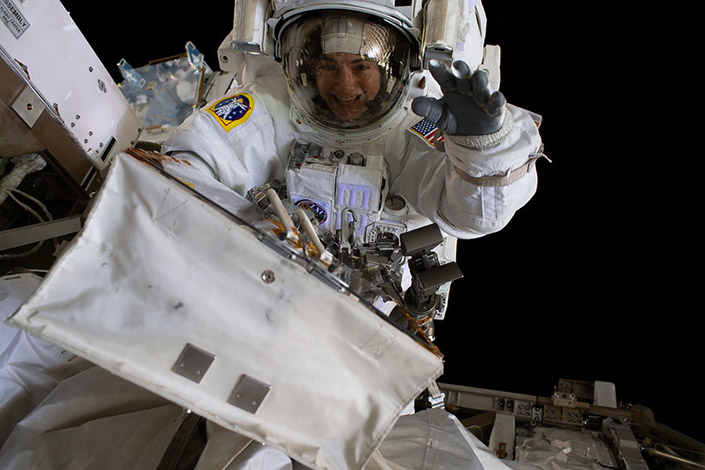
In 2021, both Meir and Rubins were selected for NASA’s Artemis program, an ambitious moon exploration project. The following year, Meir returned to UC San Diego as the keynote speaker at the All Campus Commencement, sharing insight and inspiration with the Class of 2022.
The university’s ties to NASA astronauts extend beyond its alumni. Sally Ride, the first American woman in space, was a long-time member of UC San Diego’s physics faculty after retiring from NASA. The R/V Sally Ride, an oceanographic research vessel owned by the U.S. Navy and operated by Scripps Oceanography, is named in her honor. Additionally, researchers across campus have made numerous out-of-this-world discoveries, from testing medicines in orbit to uncovering new planets and even explaining some of the universe’s biggest mysteries.
Ready for liftoff
Ahead of the Crew-12 launch, Meir spoke with UC San Diego Today about her preparation for the mission, her thoughts on returning to space in her new phase of life, what she hopes to accomplish on her journey and more. Read the full conversation below.
Q: How does preparing for this mission feel different from your first trip to space?
A: This mission feels very different from my first one given my role as the Dragon spacecraft commander, and also as commander of the ISS for part of the mission.
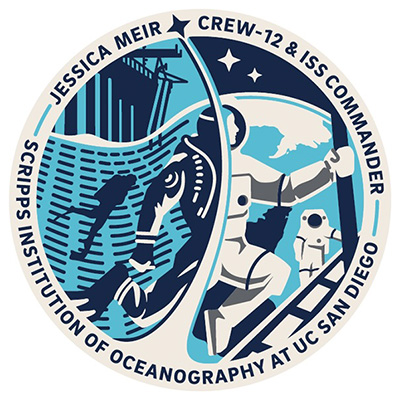
A commemorative mission patch representing Meir’s journey from Scripps to the stars.
On my first flight, I focused on my individual preparation for the mission, ensuring I was adequately trained and prepared for all of the technical parts of the mission, and on making sure I was a strong team player. Really this is all about the prime astronaut “fear” as is often described — the fear of making a mistake! Being the ones that are fortunate enough to have the opportunity to fly in space, we feel a tremendous amount of responsibility to all of the teams (and really all of humanity!) involved in the mission, and those that helped us get here.
This time, I am responsible not only for myself, but for the entire crew, as the commander holds ultimate responsibility for the crew and the mission. Of course, I also still have to make sure I am prepared as an individual, but this part comes much more easily the second time around. Now my primary focus is the well being, camaraderie and development of my crew. This has added a new level of commitment and responsibility for me.
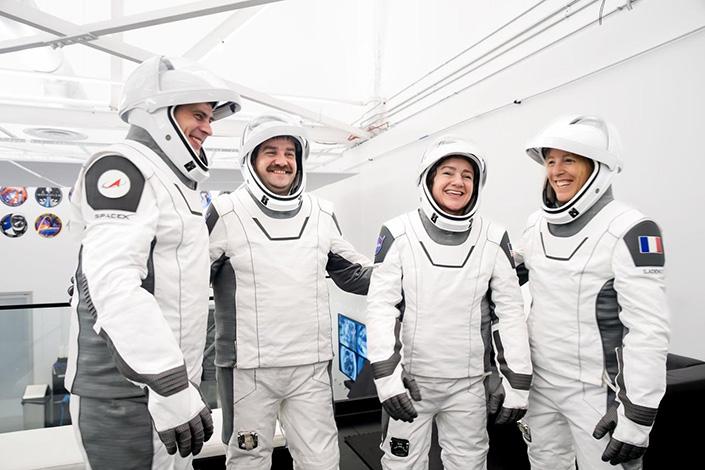
Personally, I am also in an entirely different place in my life than I was for my first flight, as now I have a husband and a daughter. Leaving my three-year-old daughter for eight months is certainly not something I take lightly, or perhaps have even fully grasped at this point!
In my first mission, I was not ready to come home, even after 205 days (almost seven months) in space. I would have rather stayed onboard the ISS for much longer. This time, given the separation from my husband and daughter, I expect things will feel much different. Eight months is more than 20% of my daughter’s entire life at this point, and given how fast children change at this age, it is a significant chunk of time to miss. I can only hope that when she is older and looks back on it, she sees herself as a part of the adventure, and understands the value of our efforts and contributions to science and exploration.
Q: Are there experiments or tasks on this mission that you’re particularly excited about?
A: There are loads of experiments planned for this mission that I’m excited about. As a scientist, the opportunity to gather data and contribute to a variety of data sets for researchers on the ground is an extraordinary opportunity. For example, our crew will be testing and commissioning E4D, the European Enhanced Exploration Exercise Device, a new piece of exercise equipment developed by the European Space Agency (ESA) for future space exploration like NASA Artemis Gateway missions. It is capable of resistive exercise (weight lifting), cycling, rowing and rope pulling. We will be testing the device to ensure its capability for future exploration missions. It will also be exciting to have even more variety for our space workouts!
As a physiologist, I’m looking forward to being a subject for studies like Cartilage Degeneration (focused on understanding more about joint health in microgravity), Cervical in Space (understating the upper spine in space and beyond) and RelaxPro (exploring the benefits of mindfulness and meditation for space missions).
Among many other experiments, we will also be participating in Manual Piloting, a study in which we’ll practice simulated moon landings (before, during and after our mission) to better understand the effects of gravitational transitions on an astronaut’s ability to land on the moon.
The most rewarding part of the mission for me thus far has been the opportunity to mentor my crewmates, given my role as commander. There are two spaceflight rookies on my flight, Jack [Hathaway] and Sophie [Adenot]. Knowing what it felt like for me the first moment I arrived in space and the remarkable opportunities I had on my first mission, I hope that I can have a positive impact on their experience and help shape their futures.
One never knows for sure what the schedule will hold, but the opportunity to do another spacewalk is also something I’m particularly excited about, especially from the mentoring capacity with my crewmates.
Q: What will you miss most about home while you’re away?
A: Most certainly the one thing that I will miss the most is my daughter. It is still very difficult to come to terms with the fact that I am leaving her for eight months. Like my first flight, I’ll also miss nature — the feeling of the breeze on your skin, the smell of freshly fallen snow in an alpine forest, the sound of the breeze rustling through the leaves of a tree — but I also found that the wonder of being in space and the profound nature of what we experience onboard the ISS often leaves you missing absolutely nothing at all!
Q: What will you be listening to on your journey?
A: We do have a playlist where we each pick a few songs to play in the Teslas as we drive to the launch pad. Then for space, like I did last time, I’ve asked a few of my musically inclined friends to make me playlists throughout the mission! There will be a lot of indie music. You can be sure that The National will be part of it — they serenaded me in space on my last mission and more recently I was able to give them a NASA tour.
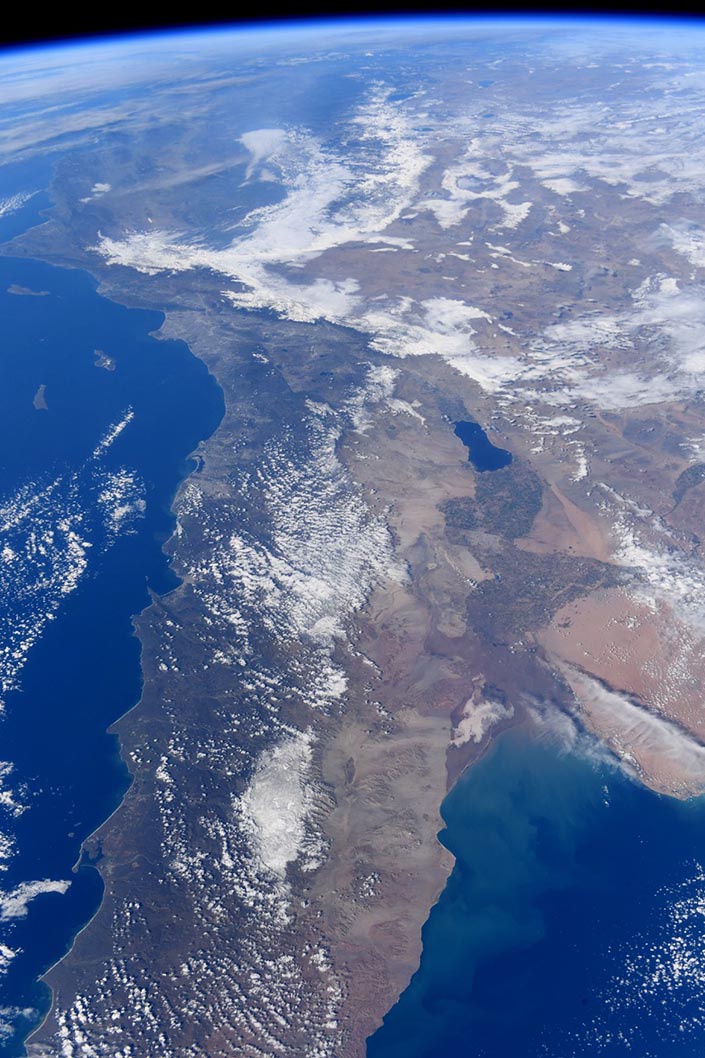
Follow Meir on Instagram and X (formerly Twitter) to keep up with her latest activities.