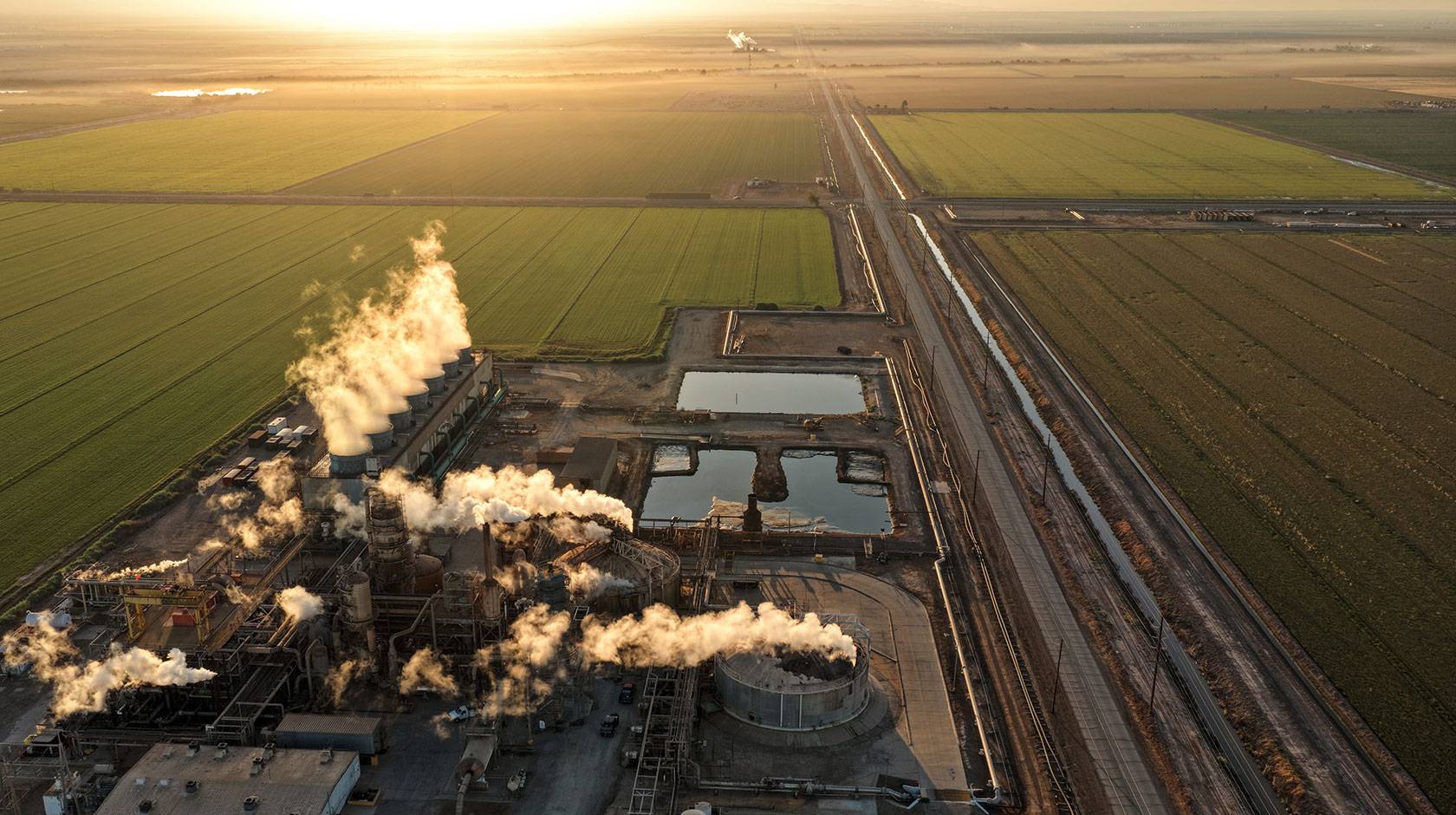
Heat is energy. That’s why we burn stuff, like oil and gas, to run our cars and generate electricity. But fossil fuels aren’t the only sources of energy buried beneath our feet. Just ask anyone who’s worked a shift in 130-degree temperatures at the bottom of a mine: Deep underground, the rock itself is plenty hot. Could we put that heat to use?
“There is more than enough potential geothermal energy underground to power the entire United States, but unlocking it safely and economically is still a major challenge,” says UC Irvine engineer Mohammad Javad Abdolhosseini Qomi. Now, with funding from the U.S. Department of Energy, Qomi leads a team of UC scientists that’s taking on this challenge
The goal: to tap into an inexhaustible source of energy that could help meet the nation’s growing need for electricity safely and economically, without contributing more climate-warming carbon to the atmosphere.
The old limits on geothermal power
Geothermal power is not actually a new idea. People have been tapping into the Earth’s buried heat for millennia, building homes over hot spots to keep warm all winter, for instance, or bathing in natural hot springs. These days we have power plants that pull steam or hot water from natural reservoirs in the earth’s crust and pipe it through turbines to generate electricity.
Today these benefits are mostly confined to the few places on Earth where water percolates through hot, porous rock, somewhere close enough to the surface that people can drill down and reach it. Iceland fits the bill: geothermal power supplies 30% of the country’s electricity. So does the Geyers, a geothermal field in Northern California, where 18 power plants generate about 2% of California’s electricity.
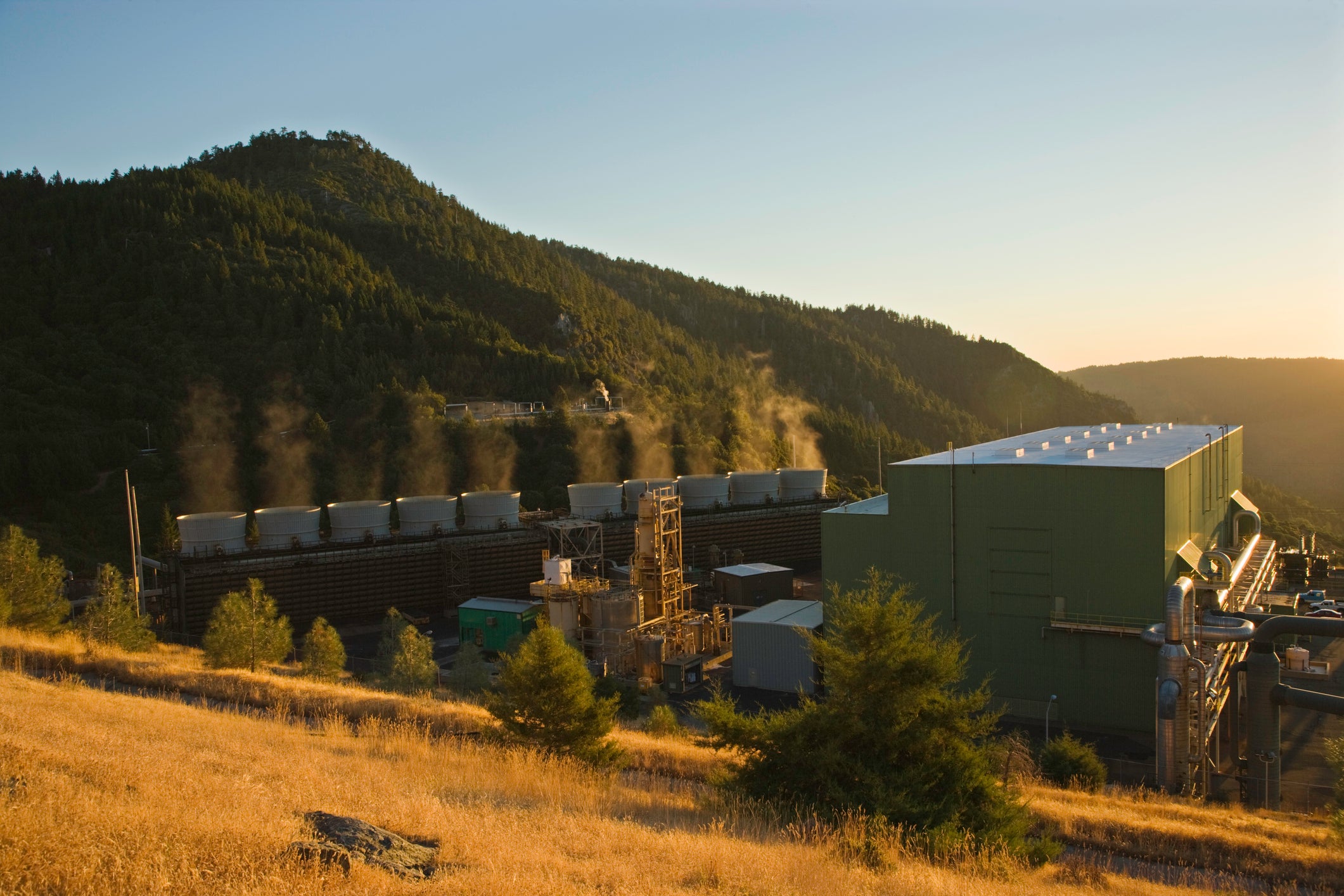
Most everywhere else, the rock is too dry, or too dense, or the heat is too far underground. But now that’s starting to change. Geothermal power is poised to grow more than 50-fold in the next 25 years, according to the U.S. Energy Information Administration. And the coming boom in reliable, renewable, zero-carbon energy has a surprising source: the fracking industry.
Fracking technology could unlock more geothermal energy
In the past 20 years, petroleum engineers have gotten better at drilling deep, and at drilling horizontally underground. Then they pipe in water, sand and chemicals to fracture the rock and release oil and gas trapped within. These methods, known as fracking, tapped deposits that other methods couldn't, and made the U.S. the world’s top exporter of liquified natural gas.
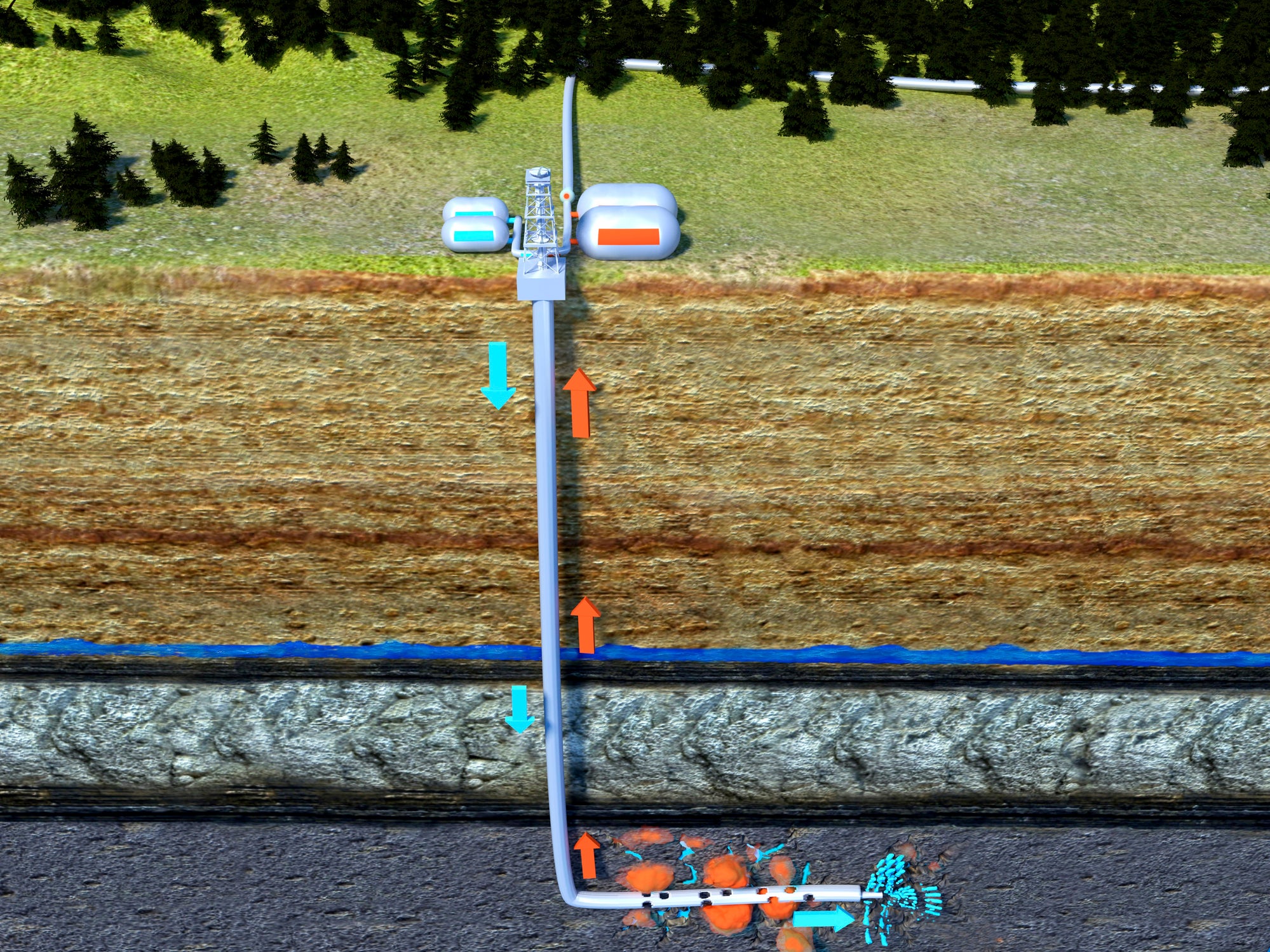
If fracking works for fossil fuels, could it also work for heat? That’s the idea behind so-called enhanced geothermal energy systems, says Qomi.
“If you drill down deep enough — three, four, even six kilometers — you reach the point where the crust is uniformly hot,” Qomi says. “Then you can drill horizontally, create fractures, and pipe in water.” The rock heats the water, turning it to steam that can run turbines that generate electricity.
“Instead of offering geothermal energy for only a few who are located in very special places,” geothermal plants could become a lot more common, Qomi says.
Making geothermal energy safer for U.S. communities
Can geothermal energy developers borrow tech from the fracking industry without also borrowing its consequences? In addition to the general hazards of burning fossil fuels — including air pollution and a changing climate — fracking in particular has caused some serious problems for local communities.
For instance: Injecting fluid in the Earth’s crust can cause what’s known in the business as induced seismicity. Between 2008 and 2019, Oklahoma saw a 900-fold increase in earthquakes as fracking expanded across the state.
Those quake swarms are a product of overlapping forces deep underground, where pressure, heat, fluids and chemistry interact in ways that scientists are only beginning to understand. It’s the kind of problem that artificial intelligence, which can detect never-before-seen patterns in complex systems, is primed to help solve.
With funding from the UC Office of the President, Qomi began assembling a team of UC experts to take on this challenge two years ago. Now, the U.S. Department of Energy is backing Qomi’s team as part of its Genesis Mission, a nationwide effort that puts AI to work for breakthroughs in energy, discovery, and national security. UC scientists lead 40 of the first 278 projects funded by the Genesis Mission, announced in July.
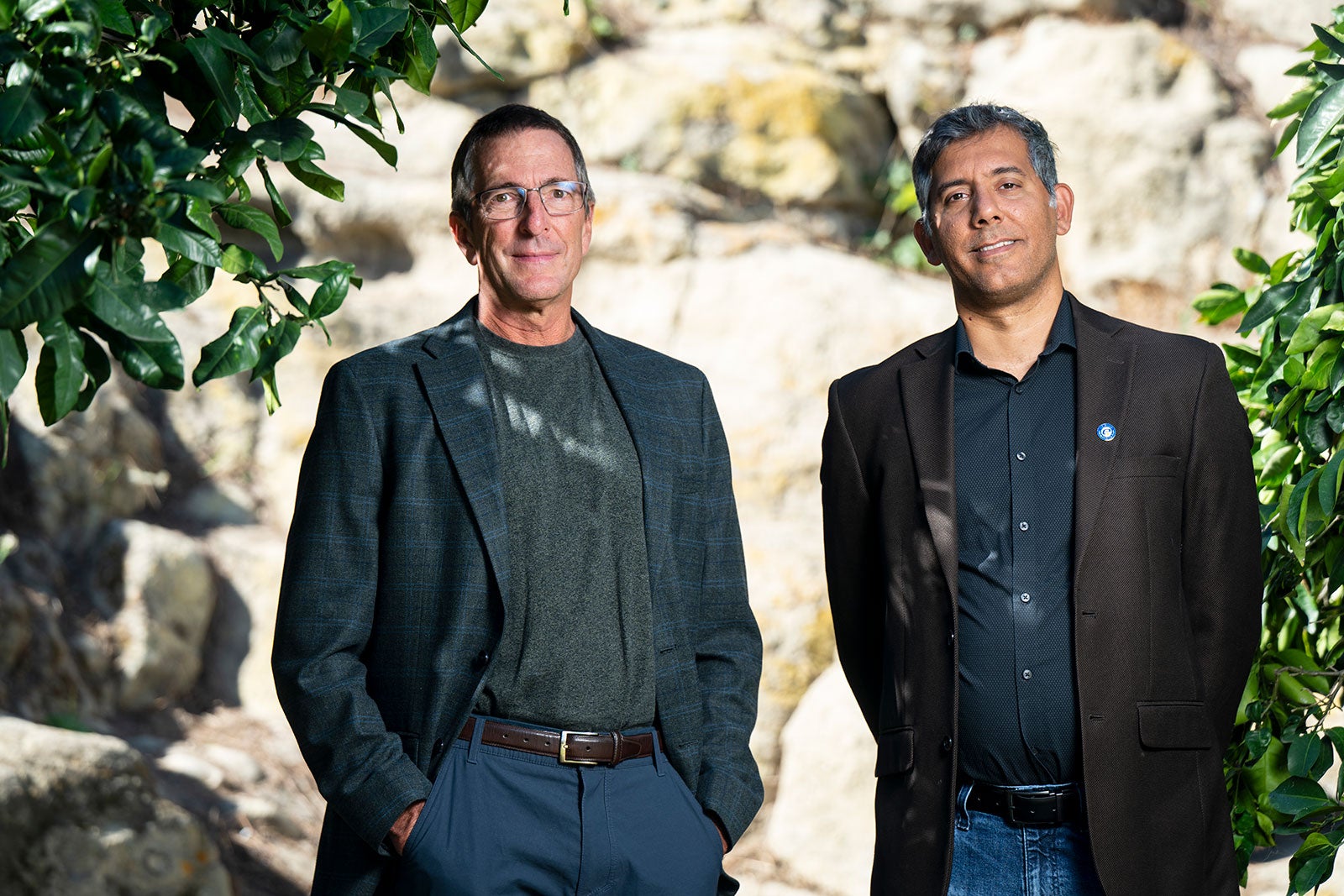
Qomi’s team now includes scientists from UC Berkeley, UC Irvine, UC Riverside, UC San Diego, UC Santa Cruz, plus Los Alamos, Lawrence Livermore and Lawrence Berkeley National Laboratories, and three industry partners. They’re blending large language models, physics-based models, and real-world data from existing geothermal sites into an artificial intelligence platform that illuminates invisible dynamics deep underground. The tool will help energy developers determine where and how to drill state-of-the-art geothermal wells safely and economically — avoiding hazards like earthquakes, groundwater contamination or broken drills.
And if they can figure that out, America could soon be on its way to powering up to 70 million homes with renewable, reliable, 24-7 geothermal energy. “This is not some sort of a science fiction kind of thing,” Qomi says. “It has its challenges, but it can be realized.”