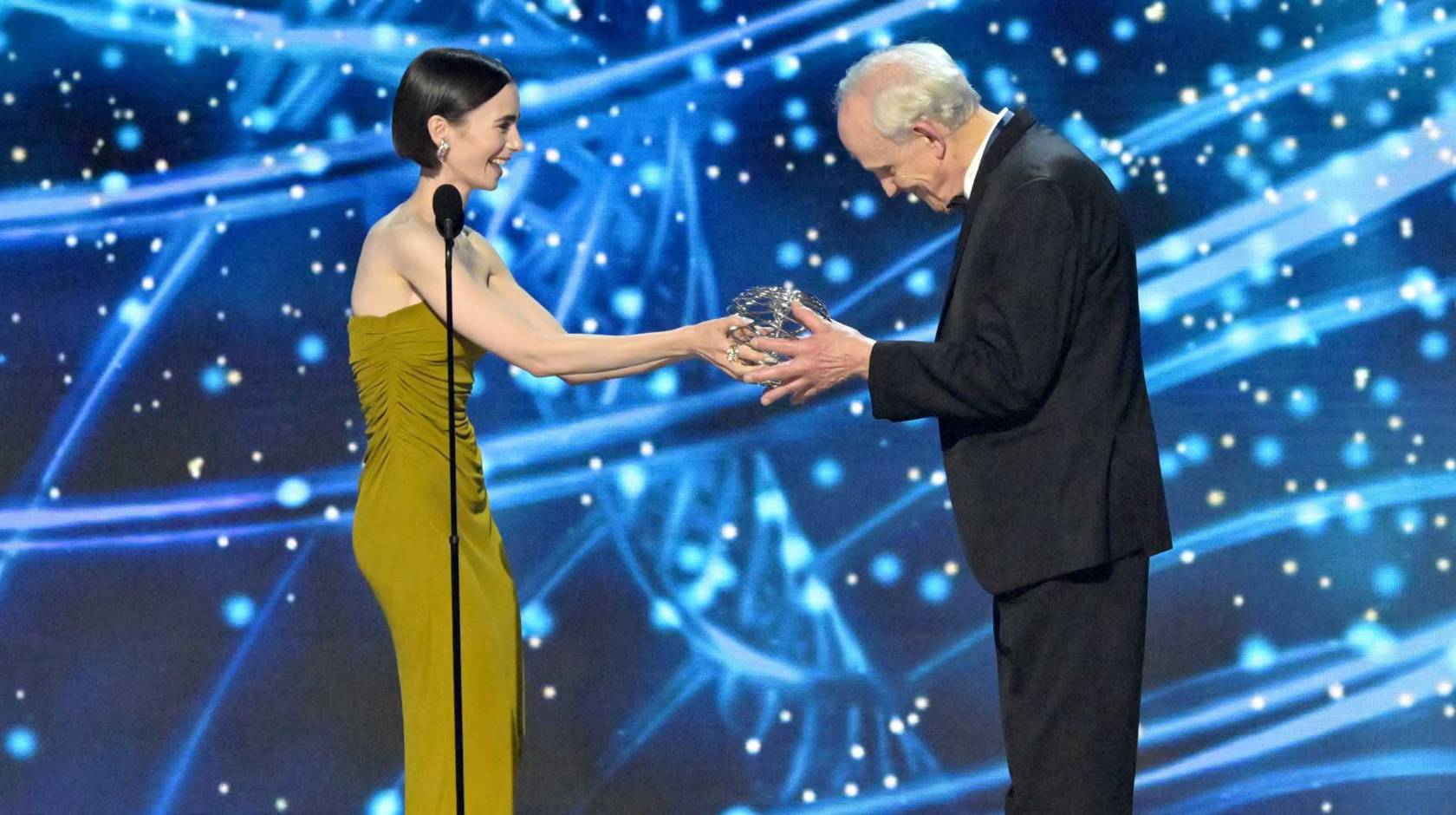
During a star-studded annual gala on Saturday, April 18, two UC Berkeley faculty members, a UCLA physicist and a UC Santa Barbara Nobel laureate were awarded prizes by the Breakthrough Foundation, honoring their incredible contributions to advancing science.
The honorees:
The winner of the 2004 Nobel Prize in physics, UC Santa Barbara’s David J. Gross was cited for “a lifetime of groundbreaking contributions to theoretical physics, from the strong force to string theory, and for tireless advocacy for basic science worldwide” in receiving the $3 million Special Breakthrough Prize in Fundamental Physics. Among his achievements, Gross discovered with his Nobel Prize co-recipients how the nucleus of an atom works. He directed UC Santa Barbara’s world-leading Kavli Institute for Theoretical Physics and is also a UC Berkeley alumnus, having earned his Ph.D. there.
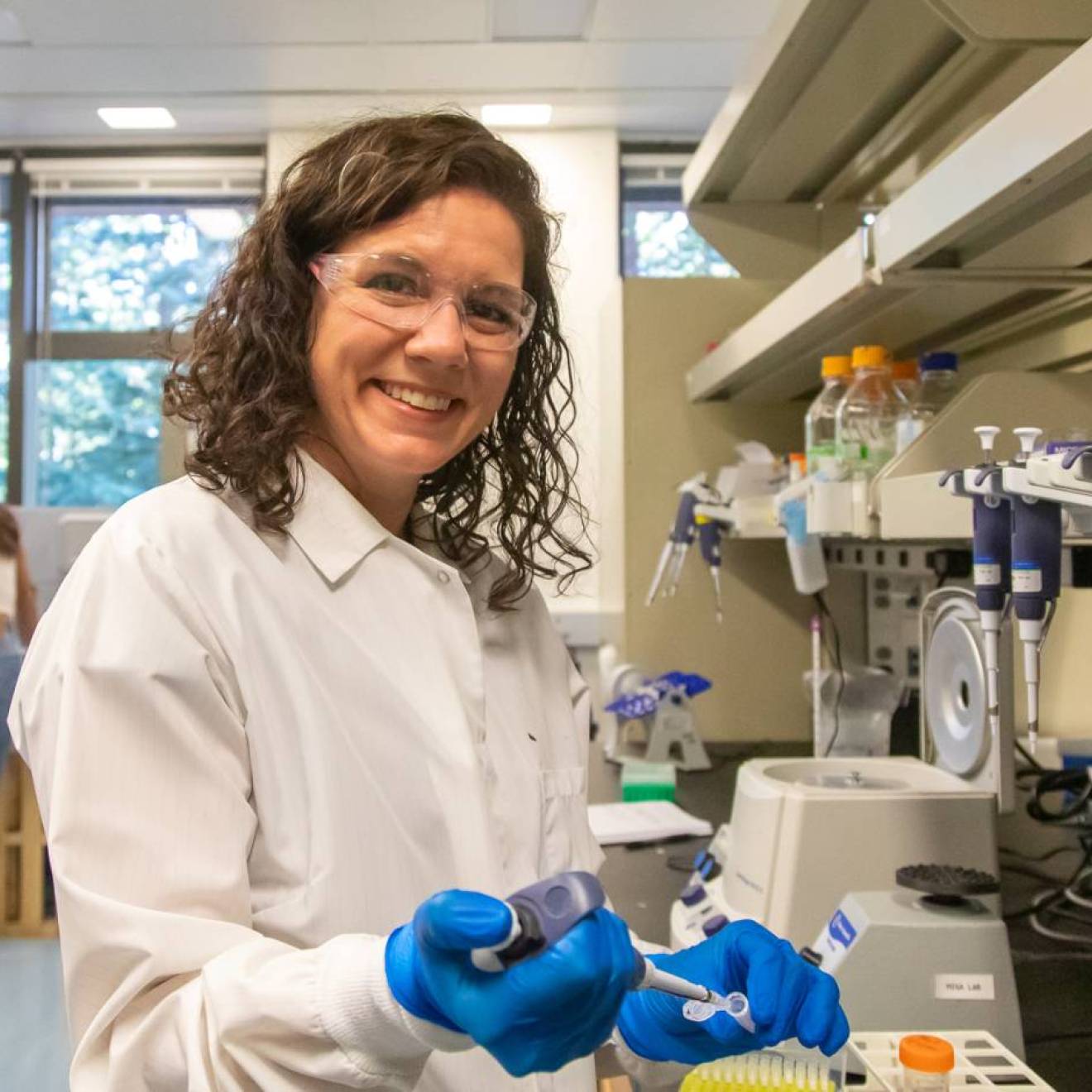
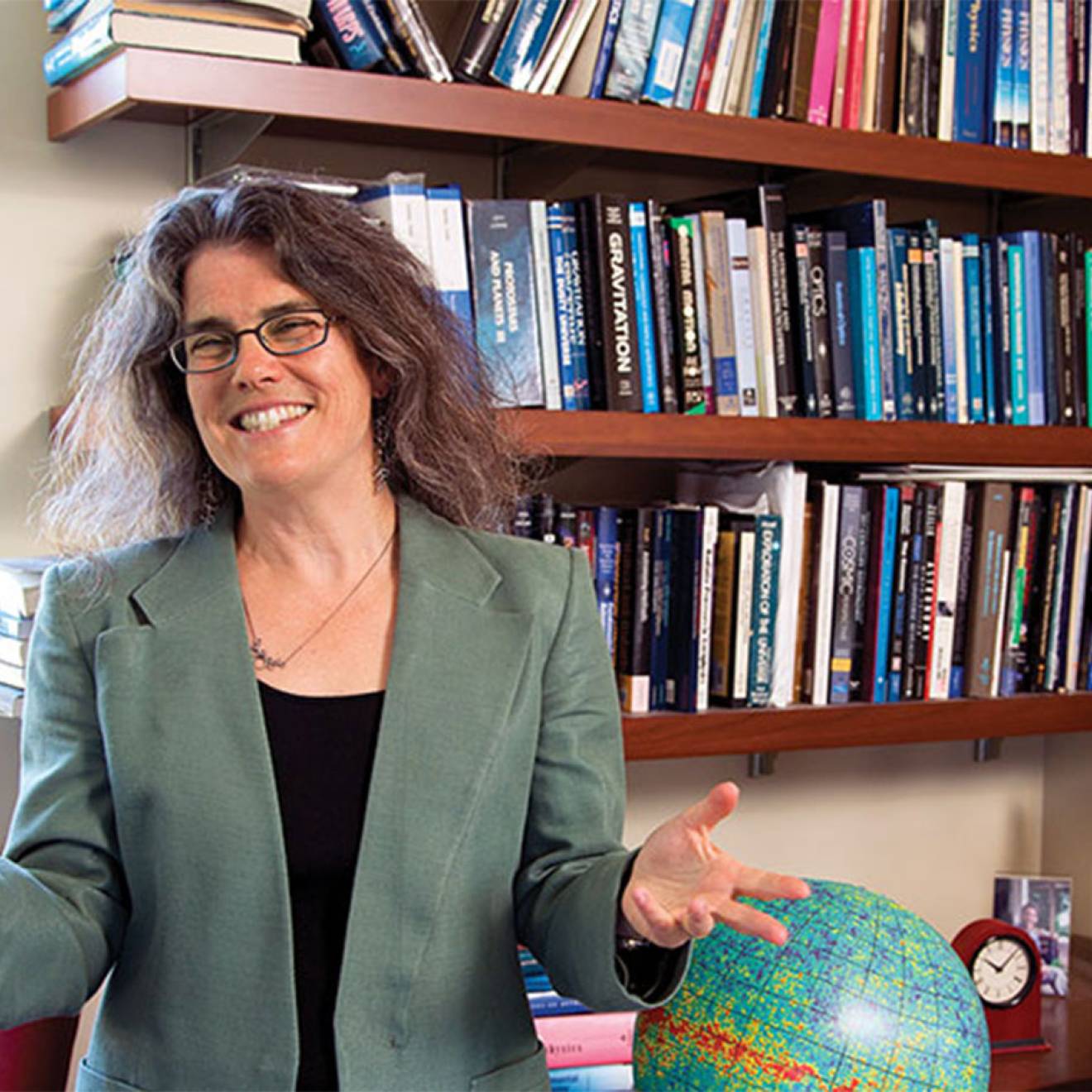
UC Berkeley's Yunqing Tang shared the New Horizons Prize in Mathematics, an honor granted to exceptional early-career researchers, for work in Diophantine geometry. Her work in this relatively new field, developed only in the second half of the 20th century, has already made groundbreaking advances in number theory.
UC Berkeley and Berkeley Lab’s Benjamin Safdi was the sole winner of the New Horizons Physics prize for his research into axion-like particles. Axions are one of the most popular candidates for the universe’s mysterious dark matter, and Safdi has investigated various ways to discover them.
UCLA physicist Thomas Dumitrescu was awarded a 2026 New Horizons in Physics Prize for exploring the notion of symmetry in quantum physics, including “in quantum field theory, particle physics, condensed matter physics, string theory and quantum information theory.”
The prizes:
Popularly known as the “Oscars® of Science,” the Breakthrough Prizes were created to fete remarkable scientists with a level of celebrity and glamour usually reserved for Hollywood stars.
Emmy-winning actor James Corden hosted the awards, which were co-created by tech superstars Sergey Brin, Priscilla Chan and Mark Zuckerberg, Julia and Yuri Milner, and Anne Wojcicki.
Now in their 14th year, the prizes bestow significant financial awards to their winners — this year’s prizes total $18.75 million, bringing the lifetime amount conferred by the Breakthrough Prizes to more than $340 million. Each New Horizons prize is $100,000.
UC scientists have won 15 Breakthrough Prizes.
Why it matters:
Revolutionary advancements in science like those made by Breakthrough Prize-winning faculty accelerate applications in medicine, national security and technology that benefit lives across the country and create countless jobs.
These advancements wouldn't be possible without federal investment — the National Science Foundation has been a principal supporter of the Kavli Institute for Theoretical Physics since its founding in 1979.
What they’re saying:
“This year’s laureates show what great science can do — deepen our understanding of the world and lead to discoveries that improve millions of lives,” said Mark Zuckerberg and Dr. Priscilla Chan, founders of Biohub. “We’re proud to recognize their work.”
“The brilliant scientists who win the Breakthrough Prize,” said Yuri Milner, co-founder of the Breakthrough Prize Foundation, “are building a cathedral of knowledge on foundations laid down by the giants who came before them. We owe our civilization — and its future — to them.”
“I feel honored and thrilled to receive this prize, and I would like to express my gratitude to my mentors as well as to my physics colleagues, collaborators, and friends,” said UCLA physicist Thomas Dumitrescu.
Read more:
UC Berkeley: Two UC Berkeley faculty members win New Horizons prizes for math and physics
UCLA: Thomas Dumitrescu wins New Horizons in Physics Prize
UC Santa Barbara: UC Santa Barbara’s David Gross wins Special Breakthrough Prize in Fundamental Physics