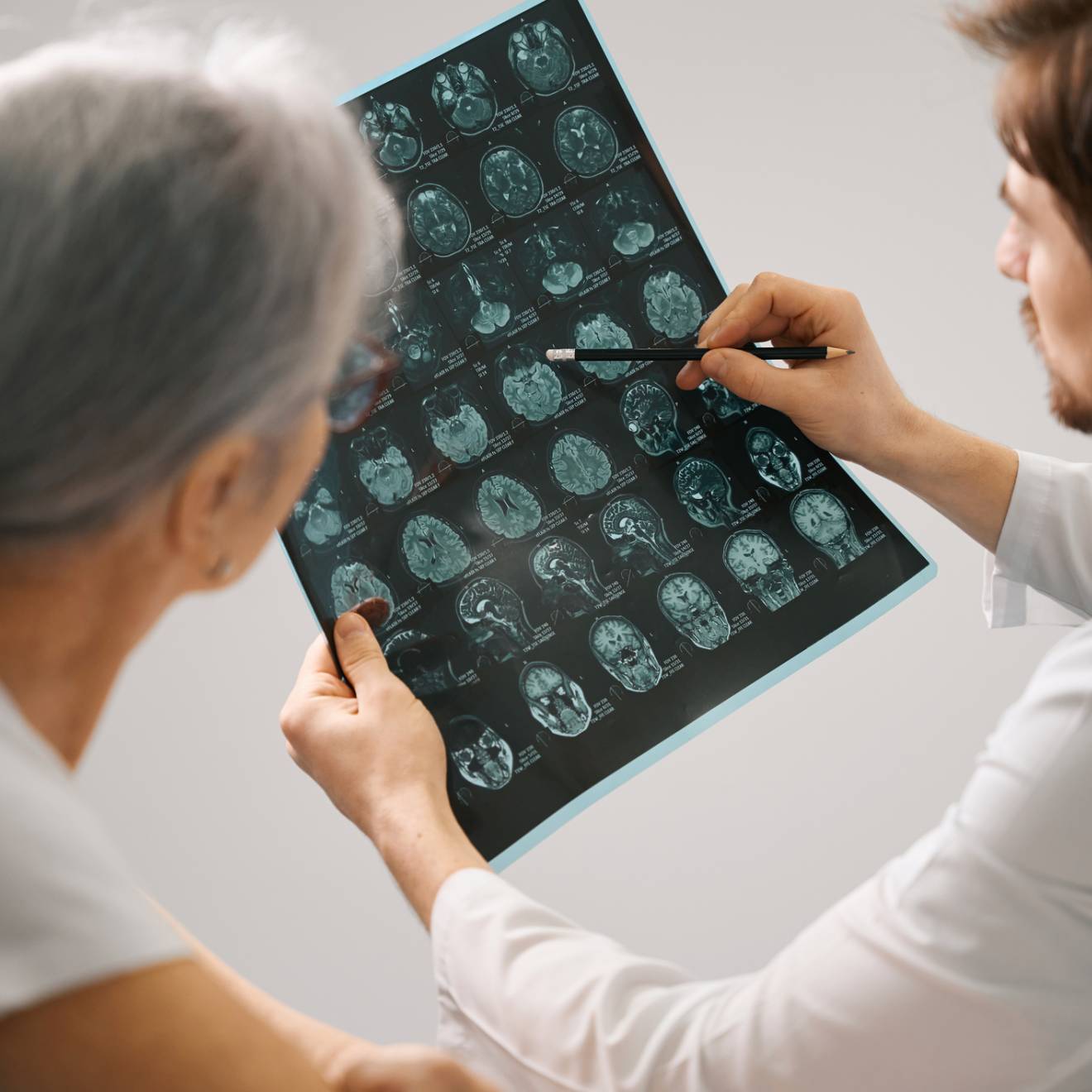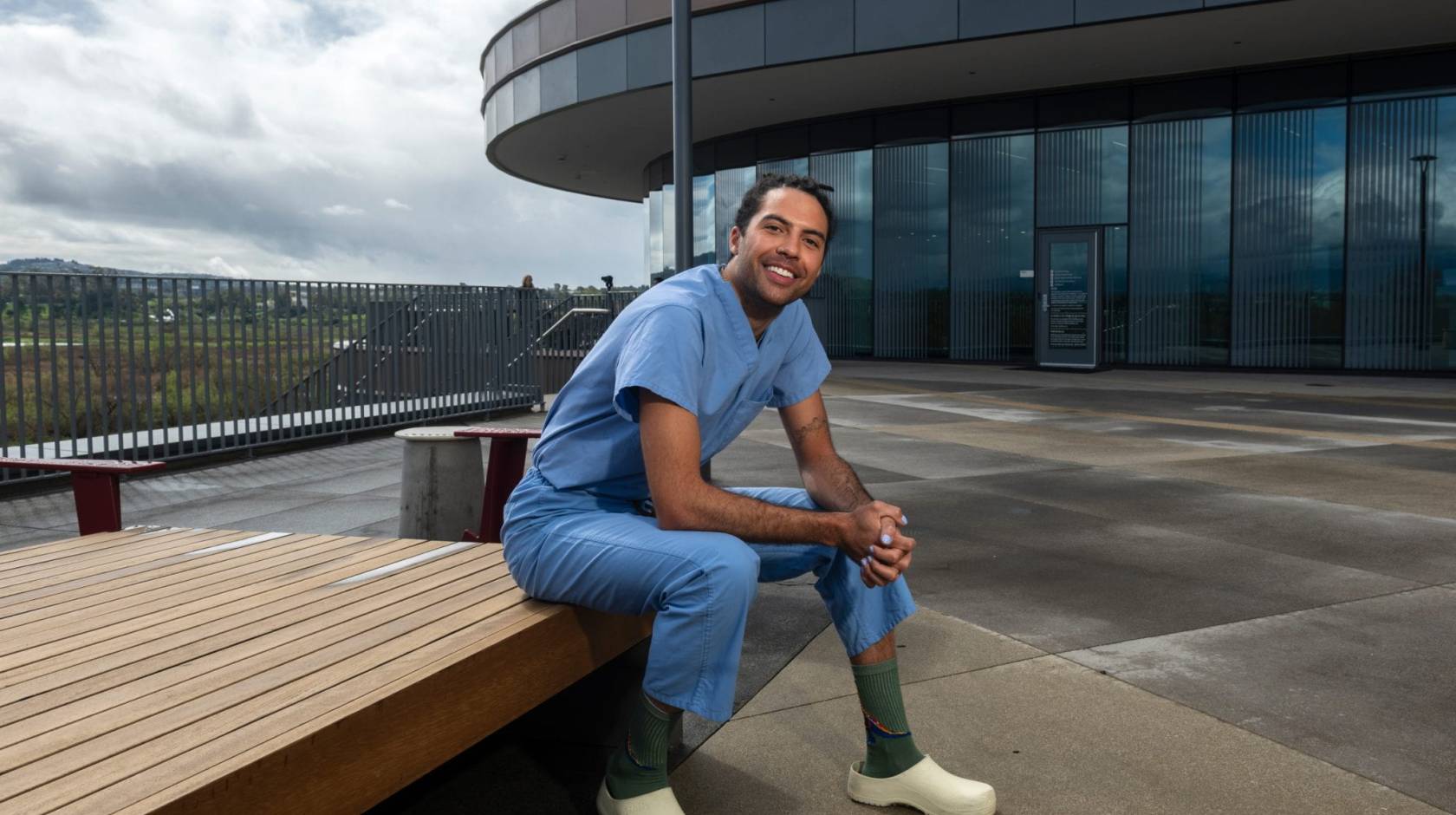
After years of hard work, grueling schedules, and rigorous studies, medical students around the country and across the University of California today will learn where they’ll go next in their journeys as doctors.
Match Day is an emotional culmination for so many talented future doctors across UC’s six medical schools. First held in 1952, Match Day was established by the National Residency Matching Program (NRMP) so that soon-to-be medical school graduates can all discover together where they will continue to learn and practice as residents for the next three to seven years. At UC Irvine, the stories of some of these students reflect the unique experiences that brought them to where they are today.
“Medical school is a very difficult path, and for many of us, this day was never guaranteed,” said UC Irvine medical student Darian Thompson. While studying public health in college, Thompson developed a deeper understanding of health inequities and the role communities can play in preventing illness — factors that ultimately led them to pursue medicine and a career that blends patient care with advocacy for systemic change.
“It’s something we’ve dreamed about for years — we’ve seen the videos, imagined the moment. Match Day feels like a rite of passage.”
Hear from more students in their own words:
Cindy Flores
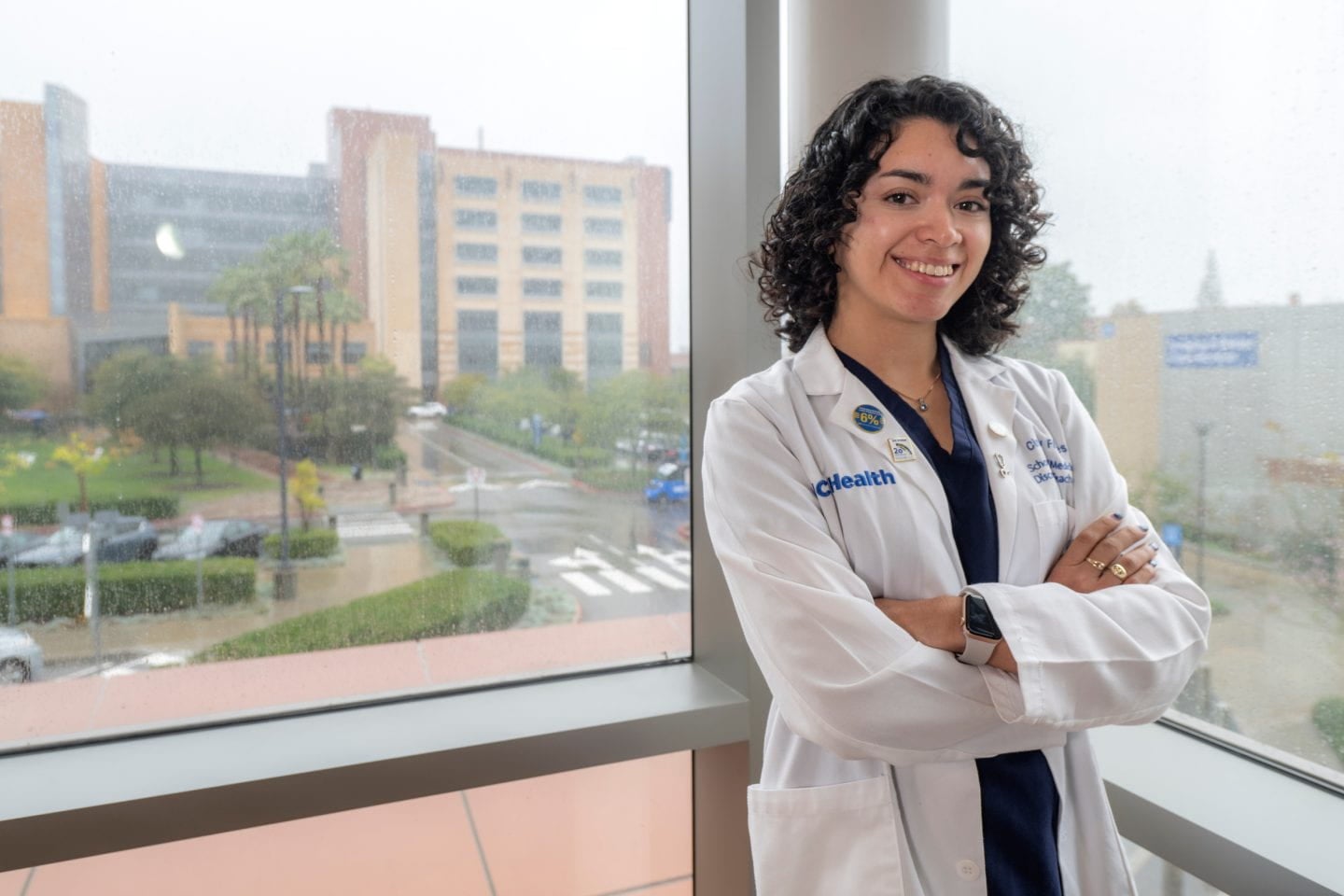
For Cindy Flores, the heart of medicine revealed itself during a quiet moment beside the hospital bed of an infant.
The child’s mother, exhausted after the weekslong hospitalization, finally allowed herself to break down.
Flores sat with her in silence, holding her hand as the woman spoke about sleepless nights, financial worries and the pain of being separated from her other child at home.
The trust built over weeks of care allowed her to share openly.
“That vulnerability will continue to inspire me throughout my career,” Flores says.
The daughter of Salvadoran immigrants, she grew up interpreting for her parents in medical settings, witnessing firsthand how language barriers and cultural differences can create gaps in care. Those early experiences helped shape her commitment to culturally responsive medicine and patient advocacy.
“Match Day is a celebration of past, present and future. I think about all the things I’ve been able to accomplish in the last four-and-a-half years but also the things that my parents and my family have accomplished to get me to this point. I’m the first physician in my family, so I’m sure there will be a lot of tears.”
Saman Andalib
For Saman Andalib, the journey to Match Day has been defined by something he considers essential to medicine: mentorship.
Throughout his time at the UC Irvine School of Medicine, Andalib sought out physicians who not only excelled in their specialties but were deeply committed to guiding the next generation of doctors. Two mentors in particular were instrumental in his path to orthopedic surgery: Dr. Ariana Nelson and Dr. John Scolaro.
Through their mentorship, Andalib discovered both the technical precision and the innovative spirit that define the field.
During medical school, he co-founded — with fellow future physician Aidin Spina — the Comprehend Lab, a multidisciplinary research initiative focused on artificial intelligence and patient education. What began as a curiosity about emerging technology grew into a broader mission to improve how patients understand their medical conditions.
“Co-founding and co-leading the Comprehend Lab profoundly molded my professional identity,” Andalib says. “It showed me how technology can amplify, not replace, the human side of medicine.”
“Match Day is the culmination of an immense amount of blood, sweat and tears. I’ve wanted to be a doctor since I was a young child, and there have been many trials and challenges along the way — from undergrad and taking the MCAT to medical school, completing preclinical classes and rotations.”
And from the mentors, for whom tomorrow is also a special day:
Dr. Ariana Nelson
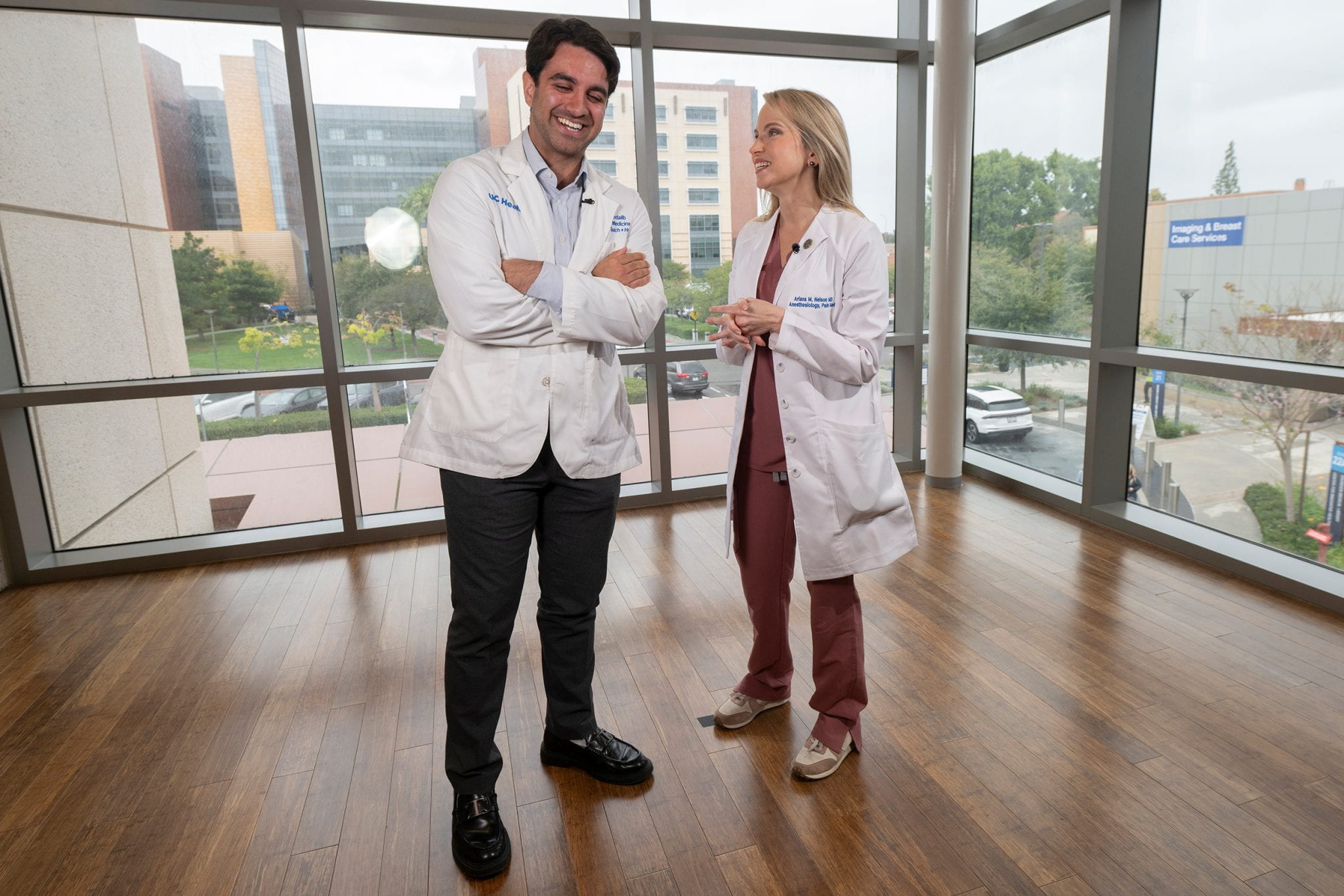
Mentorship has long been central to the culture at UC Irvine’s School of Medicine, something Dr. Ariana Nelson, associate clinical professor of anesthesiology, says she values deeply.
“I’ve been working at UC Irvine for 11 years, and my favorite part of this job is mentoring students,” she says. “You get to see their progression from clinical immaturity — not knowing what to do, what to say or even how to pronounce certain medical terms — to poised clinicians ready to help patients.”
For Nelson, mentoring medical students creates a ripple effect that extends far beyond the classroom or hospital.
“When I prepare a student well, they go out and help countless future patients,” she says. “Helping a single patient is incredibly rewarding, but seeing students go into the world and help so many others — that’s an even greater impact. I would also say that working with every student is a privilege, an immense privilege.
“However, some students come with a natural verve for discovery and a desire to make medicine better from the very start of medical school. That’s exactly what I’ve experienced with Dr. Andalib. He’s incredibly responsive and well prepared, and when conducting research with him, he’s always 10 steps ahead.”
Check back for more coverage around UC as Match Day unfolds.