Watching the Milan Cortina Olympics from Feb. 6 to Feb. 22 is a once-every-four-years opportunity to admire the talents of hundreds of the most extraordinary winter athletes from around the world. So what is it like to socialize with one?
“At some point we’ve all interacted with actual Olympians,” says Heather Kopeck, executive director of Institutional Advancement at the UC Office of the President. “They would no doubt win if I played them, but it’s not a large community of people that participate in the sport.”
Where can you go to rub shoulders with the greats? The curling rink. And whether you’re an Olympian or true beginner, you will be welcomed. Because not only is curling a game of strategy and stealthy athleticism, it’s one that prizes accessibility.
“It’s pretty humbling to get beat by junior curlers who are 15 years old, though,” warns Ian Harazduk, policy and strategic initiatives manager at the UC Office of the President, “who are much better than me.”
A community on ice
Past Winter Olympics inspired UC’s curlers to step onto the ice and try their luck. “I started in 2006, so actually I’m the curling hipster,” chuckled Jesus Barajas, associate professor in the Department of Environmental Science and Policy at UC Davis.
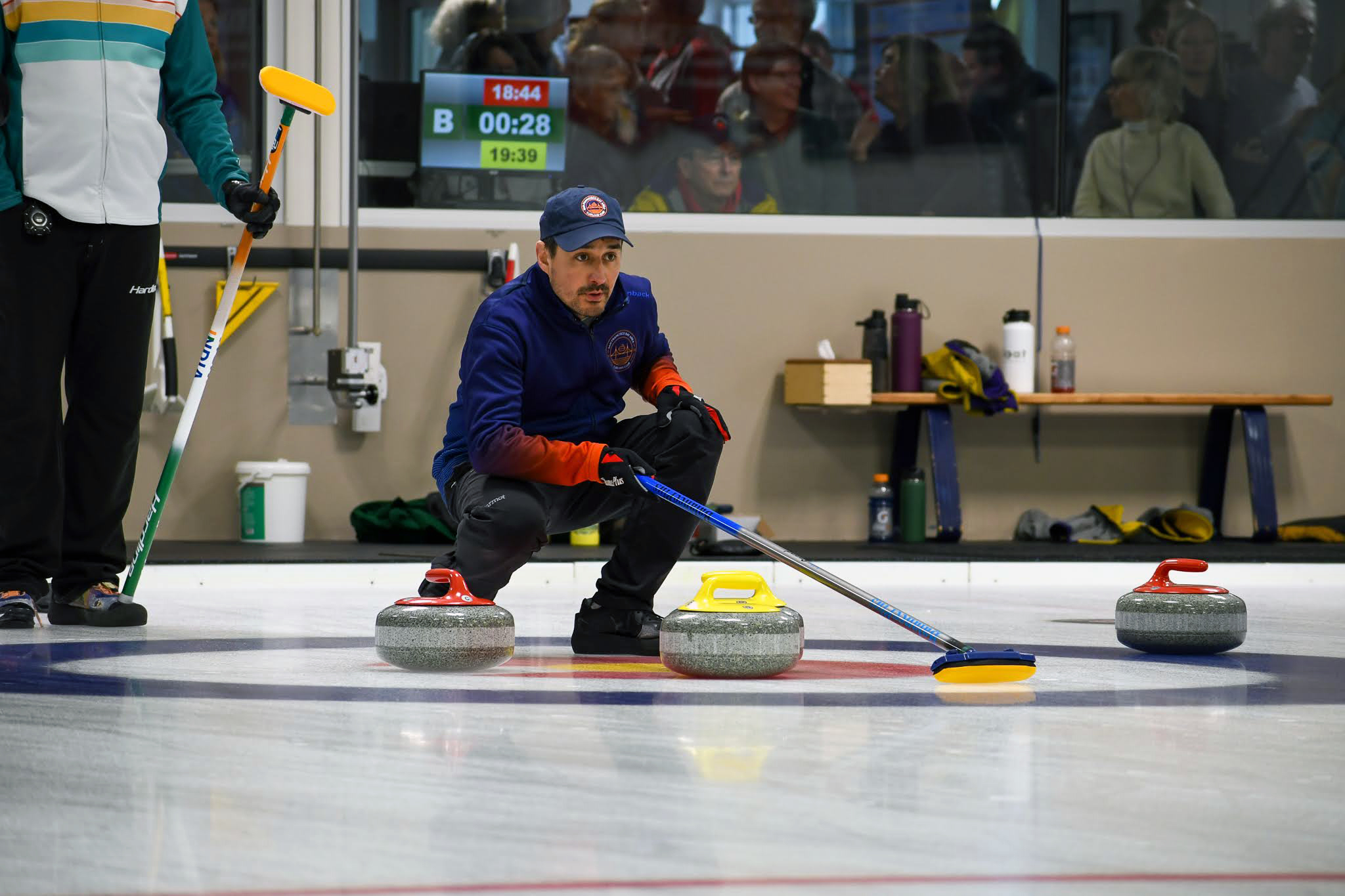
Barajas found a curling club near his then-home of San Antonio, Texas, and was hooked. Kristina Lugo, senior social media manager for UC Davis strategic communications, began playing the sport in 2014, at the same time as Kopeck. Now Barajas, Lugo and Kopeck all compete together at the San Francisco Bay Area Curling Club. Harazduk’s home ice is in San Diego, although he has curling experience in various places, with the notable exception of Denmark.
“I was too scared to try it there,” Harazduk says. That’s because Danish Olympic curler Madeline Dupont’s father invited him to come try curling with them. “I was like, ‘No, no, I’m good,’” Harazduk says. He wasn’t ready to play with Olympic-level curlers.
The broad appeal of curling is in its simplicity, especially relative to other winter sports. You need ice, yes, and stones, the term for the 20-kilogram granite pucks the players deliver toward the target, and a broom to manipulate the stone’s path when necessary, but you don’t need skates. In Paralympic curling, you don’t even need the broom — it’s a game of the purest precision of aiming stones across the ice to the target, known in the sport as “the house.” Working out the right shot, and how your stone may or may not interact with other stones placed on the ice by you or your opponent, is the challenge that brings the players back and makes every match unique. It’s a bit like bocce, a bit like chess, but with a collaborative element of anywhere from two to four players, working out the unstable physics of a stone on ice — and a spinning stone, at that.
“It’s fascinating from a gameplay perspective, and a great team sport,” Kopeck says. “Plus, the delivery of the stone is just the ultimate ASMR.”
What to watch for in the Winter Games
Curling will be ongoing throughout the Olympics — it’s one of the sports that got started before the Opening Ceremonies even began. There is a men’s team competition and a women’s team competition, each featuring four players, and mixed doubles, featuring one man and one woman curler each. UC’s curlers will be watching closely, with insight and admiration from their own curling experiences.
“If you go to a curling club or watch the Olympics, you’ll hear a lot of yelling. It’s constant communication,” Harazduk says. “It’s a matter of millimeters in the Olympics. A highlight of curling is watching when someone gets a double or triple take out, where you hit your opponent’s stones out of the place and yours lands as shot rock [the curling equivalent of a bullseye — Ed. note]. Those are amazing shots I have only dreamed of doing.”
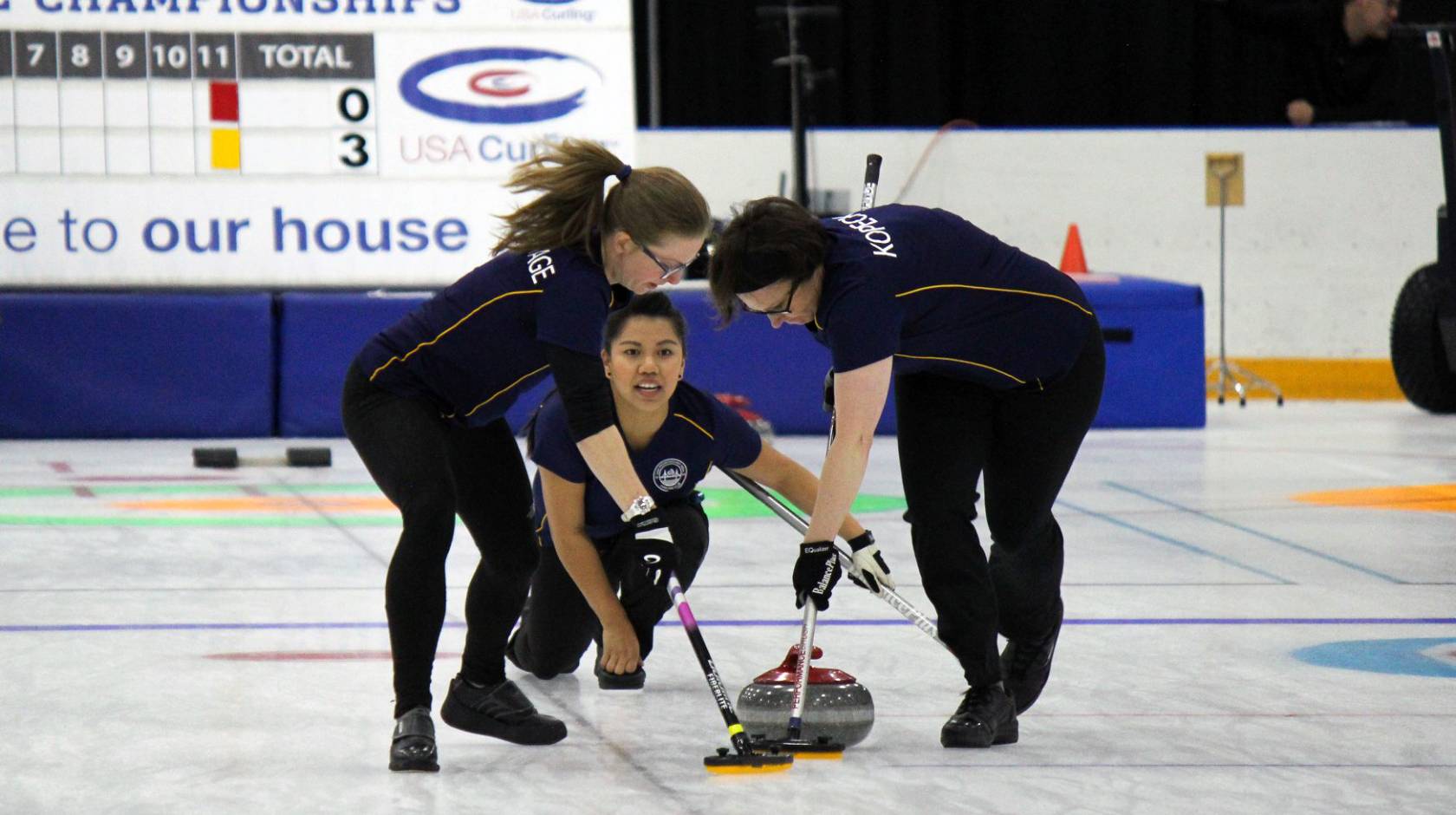
“I really enjoy sweeping,” Kopeck adds. “When I’m watching, I look at what sort of shots the players call, and what the players are seeing — they do things I wouldn’t even contemplate trying.” Impressive athleticism goes into not just throwing the stone, but sliding down the ice, sweeping furiously to affect the distance and direction of the stone, while also coordinating with your teammates in real time about how to deliver the shot.
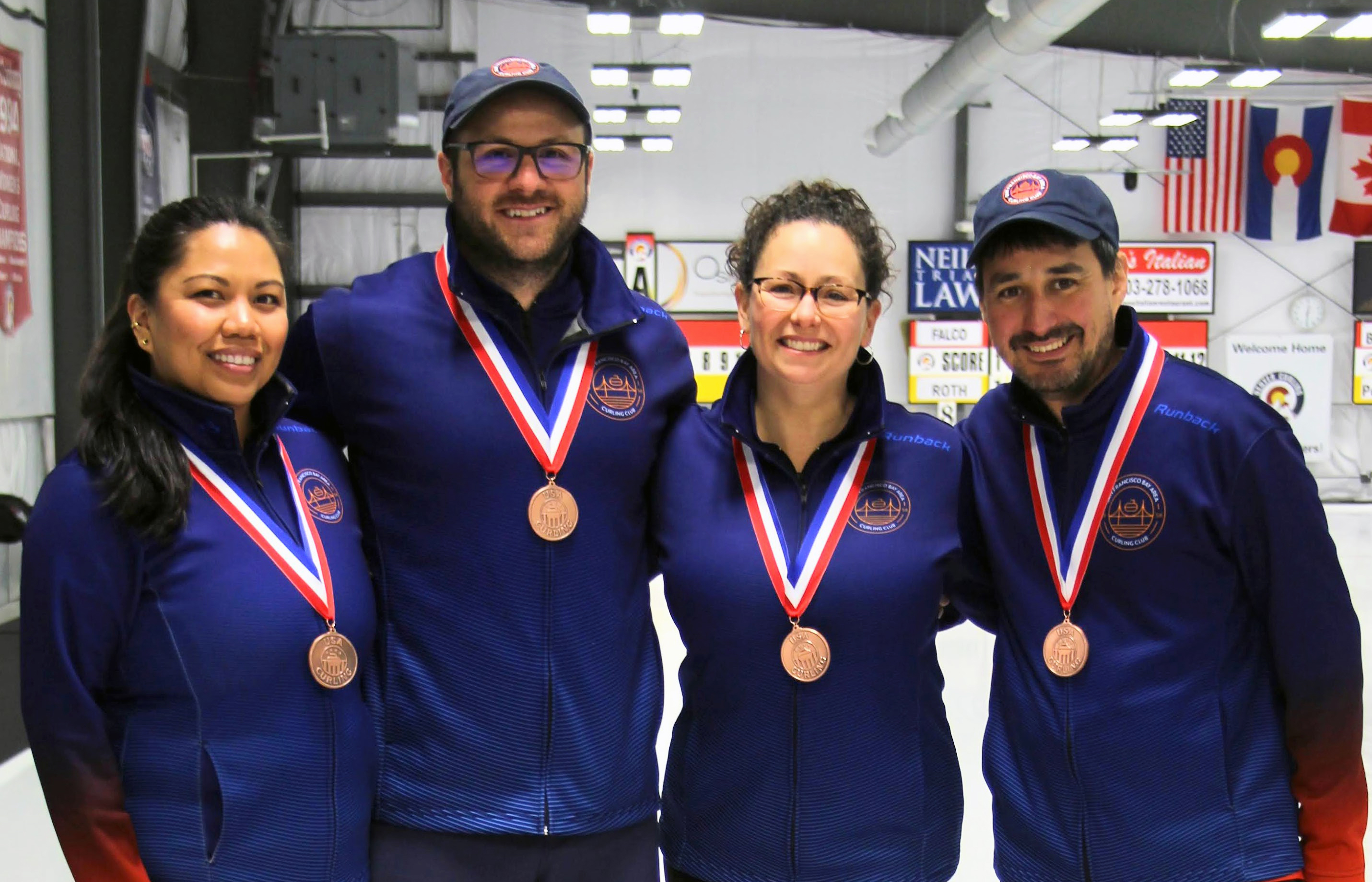
Barajas, Kopeck and Lugo have played in national tournaments sponsored by USA Curling; Barajas and Lugo won bronze playing together on a mixed team (two men, two women), and Lugo and Kopeck have won bronze on a women’s team together. These are the moments where curling’s egalitarian nature truly shines. “I had a moment where I arrived at the club and looked at the competition and said, ‘Roth? Roth? You mean the Olympian Nina Roth??’” Lugo laughs.
The game rewards the time you put into it, all the players echoed, especially now that curling has developed a more dedicated culture across the United States. “Curlers get so much better faster now,” Lugo says.
So if you’re ready to get off the couch and give the sport a try, UC’s curlers enthusiastically encourage you to do it. “It’s an awesome community of people,” Kopeck says — some of whom will be a little bit busy in Milan.

