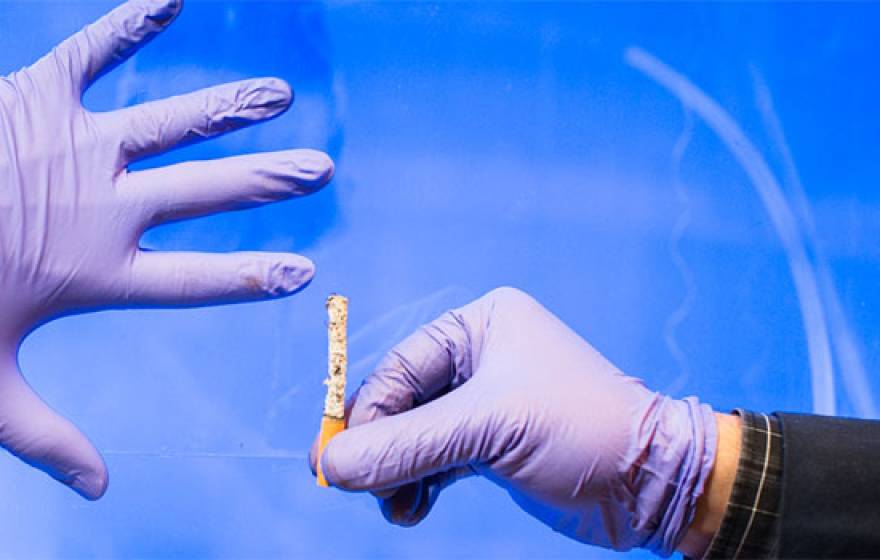
UC researchers are developing tests to detect lunch cancer in its early and treatable stages.
UC Office of the President |
Developing lung cancer lab tests

UCLA |
Possible cure for the common hangover
Pill mimics the action of the human liver, helping speed up the elimination of alcohol from the body.

UC Office of the President |
Screening smokers for lung cancer
State tax filers can help fund cancer research, including studies to screen underserved smokers for lung cancer.

UC Office of the President |
Love is in the lab
Valentine's Day comes just once a year, but love is in the air year-round on our campuses. Research on the psychological and physical aspects of l'amour is no mere flirtation.
Take the work of UC Berkeley's Greater Good Science Center. Unlike Paul Simon (who lyrically detailed 50 ways to leave one's lover), they offer five ways to renew old romance. Gratitude — one of the center's core subjects — also fuels long-term relationships.
UC Berkeley |
Human cost of climate change
Law prof's new book predicts a grim future for billions of people in this century.
UC Irvine |
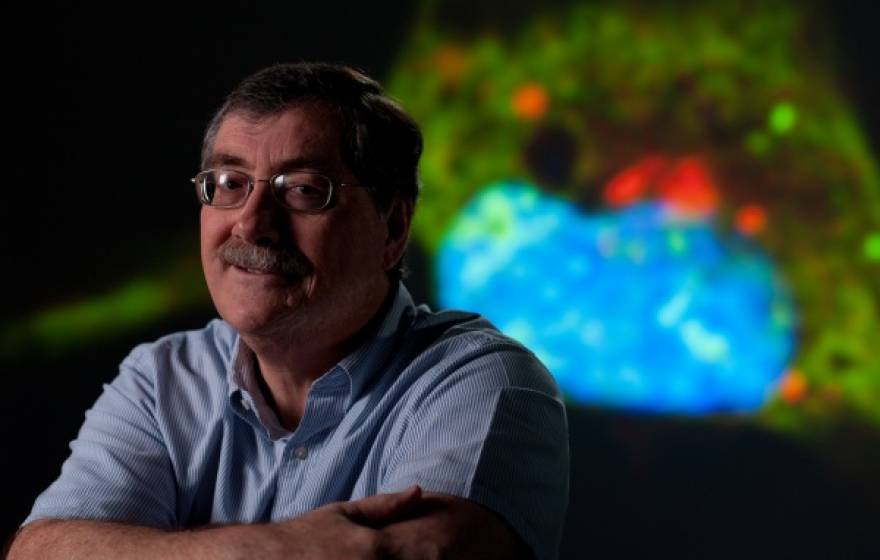
Virus detective tracks cure for common cold
Virus detective tracks cure for common cold by seeking a way to stop viruses from replicating.

UC Davis |
Earthworms contribute to climate change
Blame 'global worming' on the wrigglers: They increase greenhouse gas emissions from soils.
UCLA |
Social media may prove useful in prevention of HIV, STDs
Researchers found that gay and bisexual black and Latino men voluntarily used health-related Facebook groups.

UCLA Today |
Obese shoppers get customer service with negative vibe
Biases against overweight people emerge in shopping situations.
UC San Diego |
Working alone won't get you good grades
Students who work together and interact online are more likely to be successful in their college classes.
UC Davis |
Lighting experts push for LED quality standard
National benchmark recommended for energy-efficient lighting.
UC Santa Barbara |
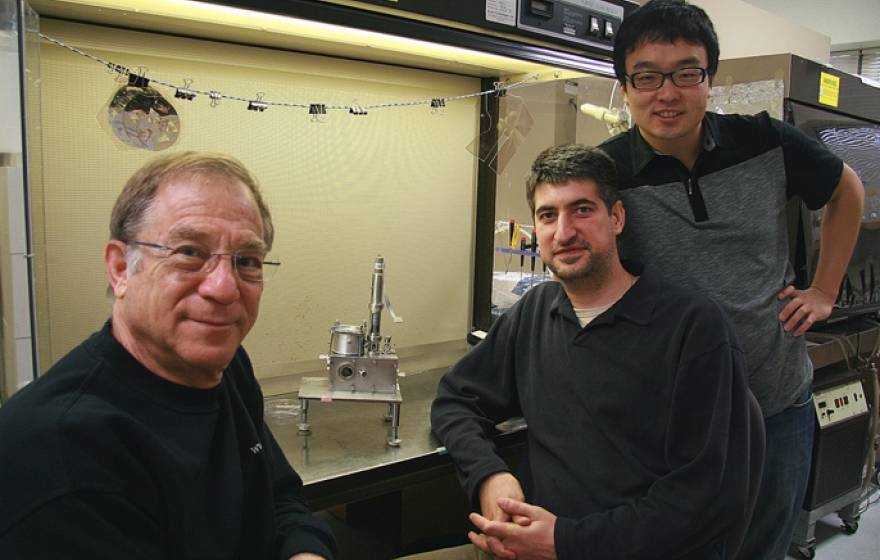
Study of friction reveals clues about arthritis
Results may make improved diagnosis and treatment, and possible prevention, possible.