UC Davis |
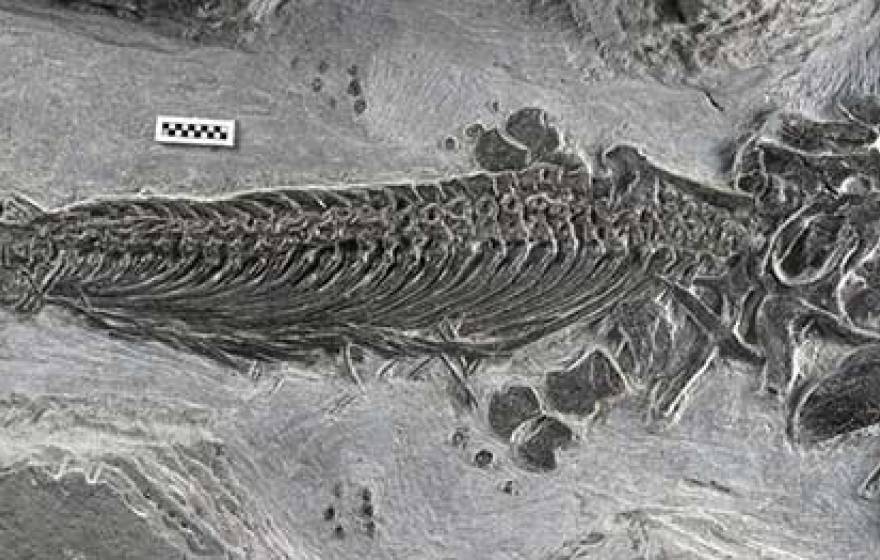
Newly found fossil fills evolutionary gap
A fossilized amphibious ichthyosaur — bearing both flippers and flexible wrists, descended from terrestrial creatures — has been discovered in China.

UC Research Tumblr |
The research inside your lunch
Before you bite into your turkey (or tofurkey?) sandwich today, consider how UC has helped improve numerous food items.
UC Berkeley |
How important is long-distance travel in the spread of epidemics?
The current Ebola outbreak shows how quickly diseases can spread with global jet travel.

Science Today |
Citizen scientists help track space dust
Imagine if you could help identify space dust brought back from outside the solar system. It’s possible – and it’s been done – by volunteers in a citizen scientist project called Stardust@Home.

Lawrence Berkeley Lab |
Boosting biogasoline production in microbes
Biology and genetic engineering join forces to fuel production of a type of alcohol in E. coli.
NPR |
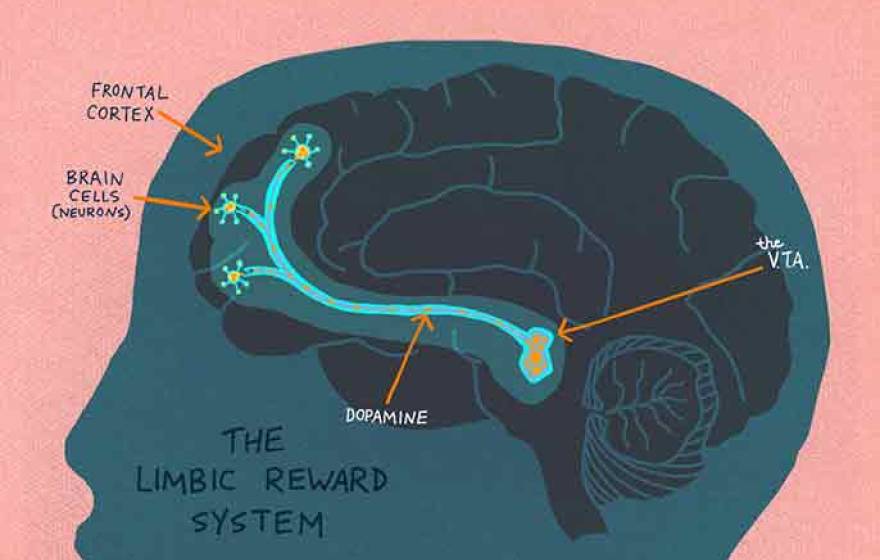
Curiosity: It helps us learn, but why?
New research from UC Davis suggests that curiosity triggers chemical changes in the brain that help us better understand and retain information.

UC San Francisco |
What monkeys can teach us about pitching
New motor learning research suggests that 'muscle memory actually is something the brain is constantly relearning.
UC Davis |
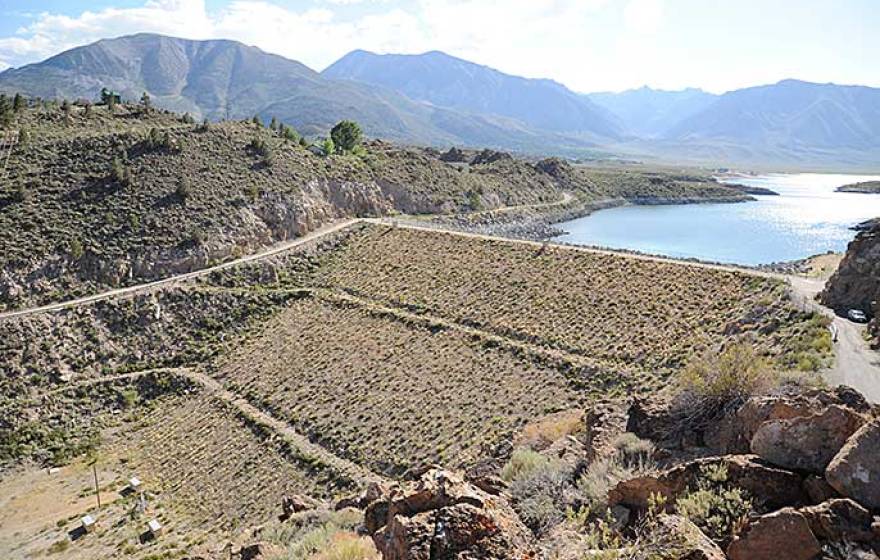
Fish survival depends on these dams
New tool identifies almost 200 dams — including some of California's largest — as having flows that may be too low to sustain healthy fish populations.
San Francisco Chronicle |
A sprinkle of compost helps rangeland lock up carbon
A compost experiment that began seven years ago on a Marin County ranch has uncovered a disarmingly simple and benign way to remove carbon dioxide from the air.
UC Davis |
Building global food security through produce research
$18.75 million grant from the U.S. Agency for International Development will boost international fruit and vegetable research.
PBS Newshour |
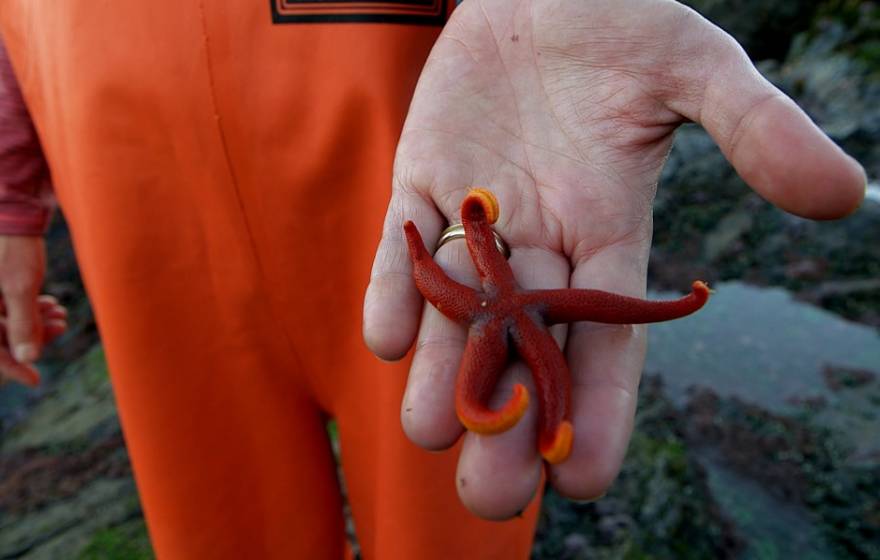
Can Alaska’s waters be a respite for sick sea stars?
A deadly disease has been wiping out West Coast sea stars for more than a year. One place that has held off the disease the longest is Alaska. Researchers recently traveled there to search for new clues.
UC Newsroom |
Spicy science: Producing hotter peppers
How hot do you like your peppers? Spicy pepper seekers, take heart: University of California researchers are studying ways to make hotter jalapeños.